

Sometimes, a new piece of photographic equipment needs a little time in the field before you can appreciate what it can do. My new Canon RF 100-500mm f/4.5-7.1 L IS USM lens has been a welcome addition to my camera bag, offering a versatile focal range that works across a surprising variety of photographic situations.
From coastal seascapes and rainforest details to general landscape photography and wildlife, it has already proved to be a useful lens to have with me. However, it was a few regular visitors, a flock of rainbow lorikeets, that gave me a particularly good opportunity to put its reach, autofocus and image quality to the test.
Getting to Know the Canon RF 100-500mm
The Canon RF 100-500mm f/4.5-7.1 L IS USM is a telephoto zoom lens designed for Canon’s RF-mount mirrorless cameras. Its focal range makes it particularly versatile. At 100mm, it can accommodate broader scenes and environmental details, while 500mm provides the reach needed to photograph wildlife from a greater distance.
One of the first things I noticed was the sharpness. Images are impressively crisp, with fine details well resolved and a pleasing overall rendering. This becomes particularly apparent when photographing birds, where individual feathers, subtle changes in colour and small details around the eyes can make a significant difference to the final image.
The lens also produces an attractive background blur, or bokeh, when the subject is sufficiently separated from the background. At 500mm, this can help isolate a bird from its surroundings and create an image in which the subject becomes the clear point of focus.
Of course, the results depend on more than the lens alone. The camera’s autofocus system, shutter speed, available light, subject distance and the photographer’s ability to keep the subject in the frame all contribute to the final image.\
Sharpness, Focus and Image Stabilisation
One of the strengths of this lens is how well it works with the autofocus capabilities of my Canon EOS R6 Mark III. Focus acquisition is quick, and the combination is well suited to photographing subjects that move unpredictably.
This is particularly useful when photographing wildlife. Birds rarely remain still for long, and even a small movement can change the composition. Having a responsive autofocus system makes it easier to maintain focus as a subject moves, although keeping a moving bird within the frame at 500mm is another challenge altogether.

Detail and sharpness of Canon RfF100-500 L USM
The lens also offers up to five stops of optical image stabilisation under Canon’s specified testing conditions. This is helpful when working handheld, particularly when photographing relatively static subjects or working in situations where a tripod would be inconvenient.
Image stabilisation is not a substitute for a fast shutter speed when photographing moving wildlife, however. A bird can move during the exposure even when the lens and camera are held steadily. For the rainbow lorikeets, I used a shutter speed of 1/3200 second to help freeze their movements.
The Practicalities of a Long Telephoto Lens
There is one practical consideration worth mentioning: the weight.
The RF 100-500mm is not an especially light lens, and holding it for extended periods can become tiring. My arm was comfortable for around 30 minutes of continuous handheld use before the weight began to make itself felt.
For my photography, this is not a significant drawback. The versatility and image quality make the weight an acceptable compromise, and I can always change my position, take a break or use additional support when necessary.
The zoom mechanism is another feature worth understanding. This is an external zoom design, meaning the front section of the lens extends as you zoom towards 500mm rather than maintaining a constant overall length through an internal zoom mechanism.
The extending barrel is a practical design choice that allows the lens to cover its broad focal range in a relatively manageable package. It does mean that the lens changes length as you zoom, something that is immediately noticeable when moving between wider and tighter compositions.
As an L-series lens, it also benefits from Canon’s professional-grade construction and weather-resistant design. This is reassuring when photographing outdoors, where changing conditions are part of the experience. Weather resistance is not the same as complete waterproofing, of course, but it adds confidence when working in environments where dust or moisture may be present.
Another useful feature is its close-focusing capability. While it is not a dedicated macro lens, it can focus closely enough to photograph smaller subjects and details, adding another dimension to its versatility.
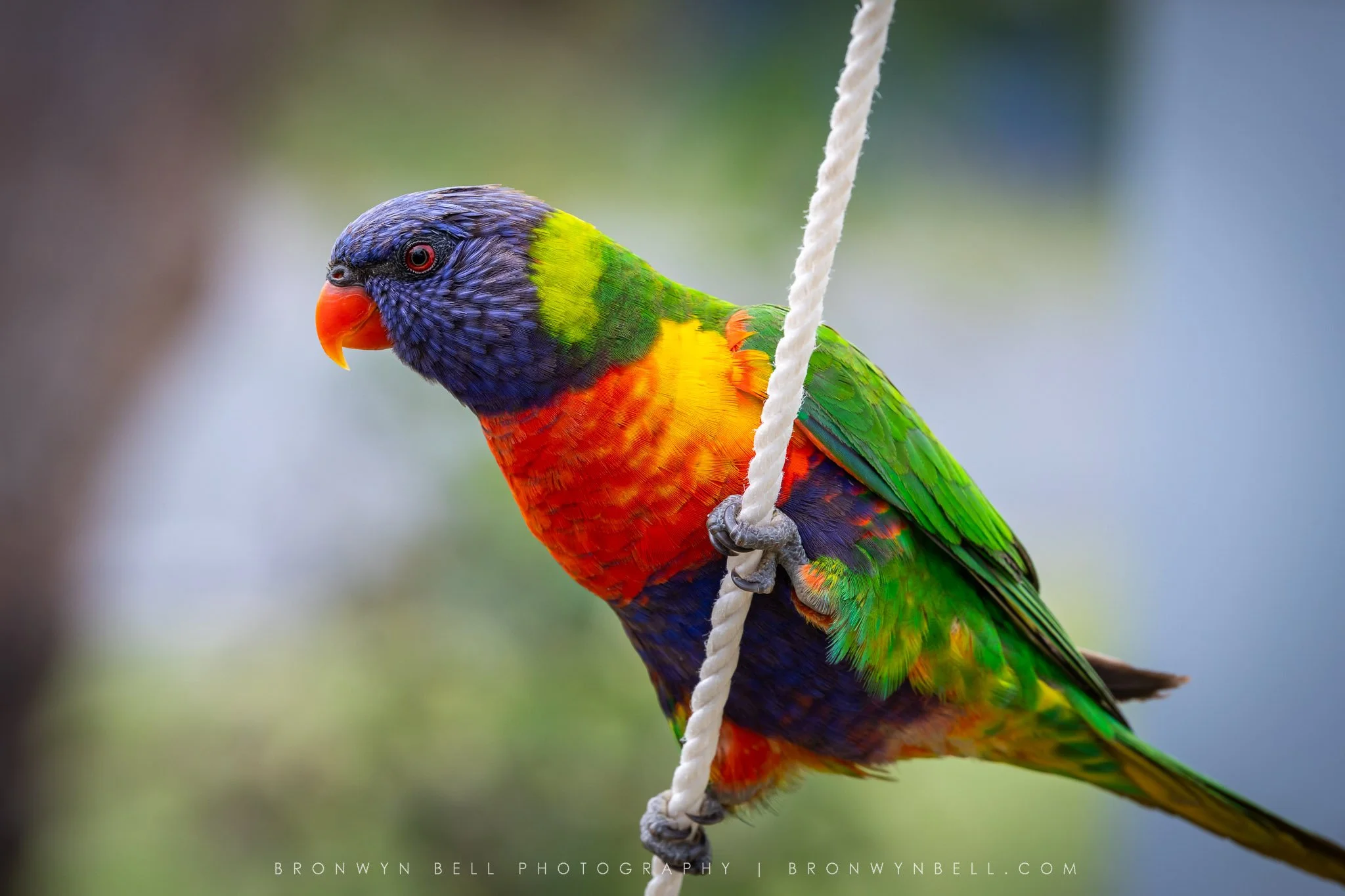
Rainbow Lorikeet distance form lens about 2.0m
Overall, I have found it a capable all-rounder. It is equally at home photographing coastal scenes, rainforest environments, general subjects and wildlife. That flexibility is important to me because I prefer equipment that can serve several purposes rather than being restricted to a single photographic genre.
A Few Visitors: Rainbow Lorikeets
The real test came courtesy of a flock of rainbow lorikeets that regularly visited in the morning and afternoon.
These colourful birds were comfortable around people and often came remarkably close. They tended to arrive in a large flock, bringing plenty of activity and noise with them. Their visits provided an excellent opportunity to experiment with the new lens, particularly at the longer end of its zoom range.
Rainbow lorikeets are wonderfully colourful subjects. Their green wings, blue heads, orange chests and red beaks provide a vivid combination of colours, while their energetic behaviour makes them interesting to photograph.
They are also challenging subjects. Even when they are accustomed to people, they rarely sit still for long. One moment a bird might be perched quietly, and the next it is moving between branches, interacting with another bird or taking off without warning.
Having a lens that can focus quickly and resolve fine detail is a real advantage in these situations.
Testing the Lens at 500mm
For the photographs accompanying this post, I worked at the full 500mm focal length.
The settings were 1/3200 second, f/7.1 and ISO 2500. These settings gave me a fast shutter speed to help freeze the birds while allowing the camera to work with the available light.
At 500mm, the lens provides substantial reach, making it possible to fill the frame with a subject without needing to be physically close to it. Even though these particular birds were unusually comfortable around people, the longer focal length still offered considerable compositional flexibility.
The resulting images were impressively sharp. Fine feather detail was clearly resolved, and the colours of the lorikeets were rendered with the clarity I had hoped to see from the new lens.
I was particularly pleased with the background separation. The combination of a long focal length and the distance between the birds and their surroundings produced a soft, out-of-focus background that helped the subjects stand out.
This is one of the advantages of working with a long telephoto lens. The background can become a relatively simple wash of colour, allowing the bird’s plumage and expression to take centre stage without competing with distracting details.
The result is not simply a close-up photograph. It is an image in which the subject is clearly defined within its environment, with the background contributing to the composition rather than drawing attention away from it.
Handheld Photography and Fast-Moving Birds
Although the lens performs very well, photographing fast-moving birds at 500mm handheld introduces a practical challenge.
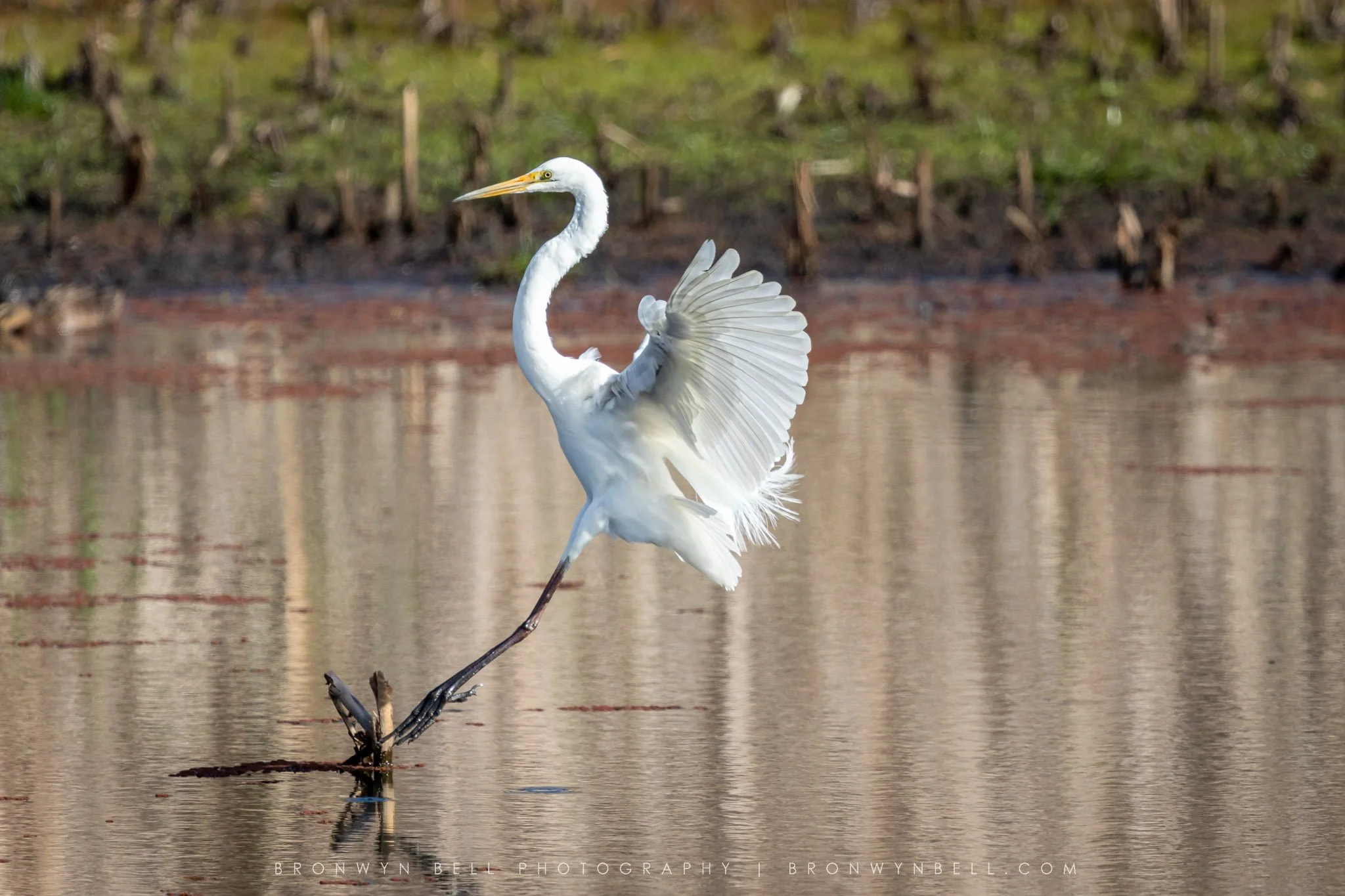
Focus is a little soft. Challenging to capture fast moving birds at full zoom.
The narrower field of view means that even a small movement can send the subject outside the frame. Finding a bird through the viewfinder, keeping it in view as it moves and maintaining a suitable composition can take practice.
This was particularly noticeable when the lorikeets moved quickly between perches or flew from one part of the area to another. The autofocus could respond quickly, but I still needed to anticipate the birds’ movements and keep the lens pointed in the right direction.
For relatively stationary birds, the lens was comfortable to use handheld for shorter periods, and the image stabilisation was useful. With fast-moving birds, however, the physical demands become more apparent.
For extended sessions photographing active wildlife, I can see the benefit of using a gimbal head and a suitable tripod. A gimbal would help support the weight of the lens while allowing smooth movement as a bird changes position. It would not eliminate the need for patience or good tracking technique, but it could make longer sessions more comfortable.
That said, there is also something enjoyable about working handheld. It allows you to move quickly, change your position and respond to unexpected moments. For a short visit from a flock of lorikeets, being able to react immediately was valuable.
The key is recognising the limitations of the equipment and choosing the approach that best suits the subject.
A Versatile Addition to the Camera Bag
My experience so far has been positive. The Canon RF 100-500mm f/4.5-7.1 L IS USM delivers excellent sharpness, fast and responsive autofocus when paired with the EOS R6 Mark III, useful image stabilisation and the flexibility to photograph a wide range of subjects.
The weight is noticeable during extended handheld use, and tracking fast-moving birds at 500mm takes practice. Neither issue has diminished my overall impression of the lens.
Its versatility is perhaps its greatest strength. I can use it for a broad coastal landscape, pick out details in a rainforest, photograph a distant subject or work at full zoom to capture the finer details of a bird’s plumage.
The rainbow lorikeets provided a useful early test, demonstrating just how much detail the lens can capture and how effectively it can separate a subject from its background.
And, of course, they provided a welcome reason to spend more time behind the camera.
Sometimes, the best way to get to know a new lens is simply to take it outside, find an interesting subject and see what happens.
In this case, a few colourful visitors made that process considerably more enjoyable.
Technical Specifications
Lens: Canon RF 100-500mm f/4.5-7.1 L IS USM
Lens mount: Canon RF
Focal length: 100-500mm
Maximum aperture: f/4.5-7.1, varying with focal length
Minimum aperture: f/32-54, varying with focal length
Image stabilisation: Optical IS, rated up to 5 stops under specified testing conditions
Autofocus: Nano USM
Minimum focusing distance: Approximately 0.9m at the wide end, increasing at longer focal lengths
Maximum magnification: Approximately 0.33x
Lens construction: L-series professional-grade construction
Weather resistance: Dust- and moisture-resistant design
Zoom mechanism: External zoom, with the lens barrel extending as the focal length increases
Filter diameter: 77mm
Lens type: Telephoto zoom
Camera: Canon EOS R6 Mark III
Camera system: Canon EOS R mirrorless
Sensor: Full-frame CMOS
Resolution: Approximately 32.5 megapixels
Lens mount: Canon RF
Autofocus: Dual Pixel CMOS AF II
Image stabilisation: In-body image stabilisation
Photography type: Wildlife, nature, landscapes and general photography
Rainbow Lorikeet Photograph Settings
Subject: Rainbow lorikeet
Lens: Canon RF 100-500mm f/4.5-7.1 L IS USM
Focal length: 500mm
Shutter speed: 1/3200 second
Aperture: f/7.1
ISO: 2500
Focusing method: Autofocus
Shooting method: Handheld
Image characteristics: High detail, sharp feather definition and soft background blur
Photographs made with the Canon EOS R6 Mark III and RF 100-500mm lens.
