

Walking the Tathra Coastline: From Tathra Beach to Kianinny Bay
The coastline around Tathra provides a great combination of walking and photography. The route from the Tathra Beach area, across the headland and towards Kianinny Bay passes through coastal vegetation, bushland, open lookouts and sections of rocky coastline.
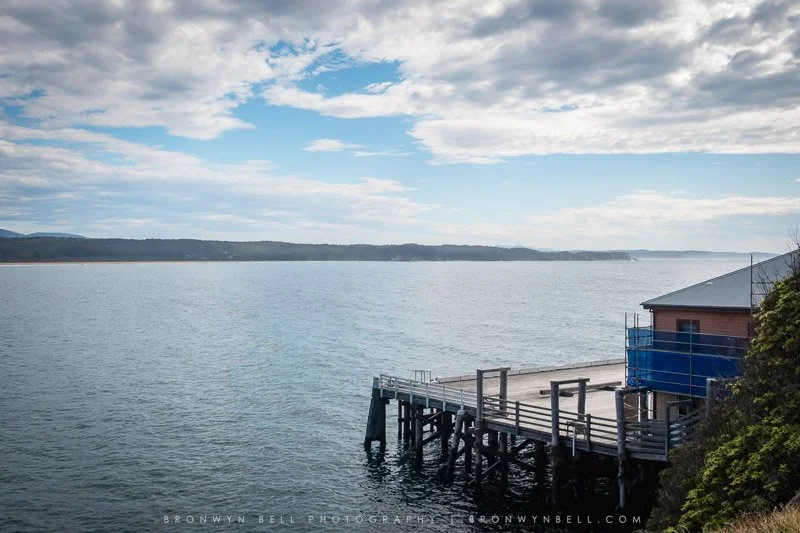
Historic Tathra Wharf.
For a photographer, this makes the walk particularly interesting because the landscape changes frequently. One moment you can be walking beneath dense coastal vegetation, and shortly afterwards the track opens onto a coastal lookout with views across the Pacific Ocean. The walk provides an opportunity to combine a short coastal walk with landscape photography without needing to carry equipment over a long or particularly demanding route.
Starting at Tathra Beach
The walk can begin around the southern end of Tathra Beach before climbing towards the headland. As the track rises, the views gradually open up over the beach and coastline. This provides opportunities to photograph the beach from above rather than only from the shoreline. The changing elevation also creates opportunities for different compositions. Looking back towards Tathra Beach provides a broader view of the coastline, while sections of vegetation can be used as foreground elements.
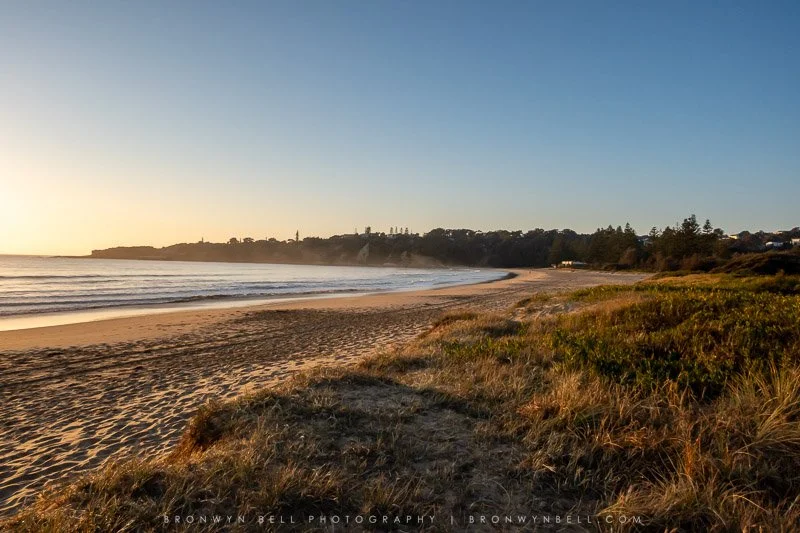
Looking south towards Tathra headland.
Through the Coastal Bushland
One of the features of the walk is the contrast between the enclosed bushland sections and the open coastal viewpoints. Much of the track passes through shrubs and trees, creating darker and more enclosed environments. These sections can be challenging for photography because of the contrast between bright sky and shaded vegetation. Rather than trying to photograph everything, I look for small compositions within the vegetation. Tree trunks, branches and openings through the foliage can be used to frame the coastal landscape. When the track emerges from the vegetation, the change in light can be dramatic. These openings provide opportunities for wider landscape photographs.
Tathra Wharf
The route continues towards the historic Tathra Wharf. The wharf is one of the most recognisable features of Tathra and provides a strong photographic subject. The structure extending out over the water creates a natural leading line towards the horizon. The surrounding coastline also provides opportunities to photograph the relationship between the wharf, ocean and headland. The Tathra Headland Walk connects the headland and historic Tathra Wharf via walking paths and boardwalks, with viewing areas along the route.
Stopping at the Tathra Hotel
One of the enjoyable aspects of the walk is that it can be combined with a stop at the historic Tathra Hotel. The hotel provides an opportunity to take a break before continuing along the coastline or returning towards the beach. For a photography walk, this also makes the route less about simply completing a distance and more about taking time to explore the area.
Continuing Towards Kianinny Bay
From the Tathra Wharf and headland area, the coastline continues south towards Kianinny Bay. The landscape becomes increasingly natural, with coastal vegetation, rocky sections and viewpoints across the ocean. The Tathra Coastline Walk is described by local tourism information as a coastal walk linking Tathra Wharf and Kianinny Bay. The complete route is longer than the short Tathra Headland Walk, so the time required will depend on where you start, how far you walk and how often you stop for photographs. For a photographer, the advantage is that there is no need to rush. There are plenty of places to stop and photograph the coastline along the way. One disadvantage is that the walk down into Kianinny Bay is very steep. This means if you go down you have to come up! There is a steep roadway out or you can take the clliff line steps down and back. The cliff line steps are not treacherous, just steep for a while, but along there way there are viewpoints.
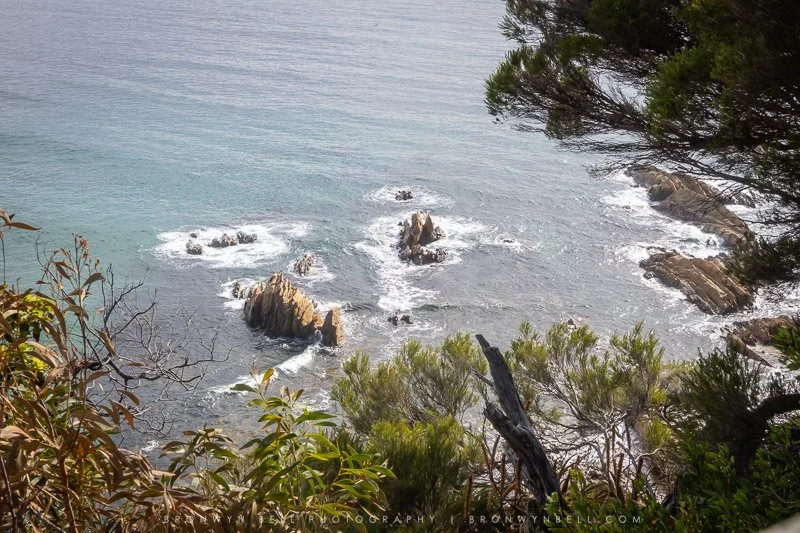
Rocky coastline around Tathra headland.
Photography Along the Walk
I prefer to use the changing landscape to create a variety of photographs rather than photographing the same type of scene repeatedly. Wide-angle compositions work well when the track opens onto the coastline. A longer focal length can be useful when photographing distant headlands, ocean details or isolated coastal features. The vegetation can also be used creatively. Framing the ocean between trees or shrubs creates depth and gives the photograph a stronger sense of place. When the light is strong, looking for shaded foregrounds can help balance the exposure between the land and sky.
Lightroom Editing
The Lightroom editing process for these photographs follows a similar approach to the sunrise images.
Auto and Exposure
I usually begin with Lightroom’s Auto adjustment to establish a starting point. I then manually adjust Exposure, Highlights, Shadows, Whites and Blacks. Coastal scenes can contain very bright areas of sky alongside dark vegetation, so controlling the Highlights and opening the Shadows can be particularly useful.
Colour
Colour adjustments are kept relatively natural. The coastal vegetation often contains a range of green tones, while the ocean and sky can introduce blue and cyan tones. Vibrance can be used to increase overall colour intensity, while HSL adjustments allow individual colours to be refined without affecting the entire photograph.
Sharpening and Detail
Texture and Clarity can help bring out detail in rocks, vegetation, timber and other foreground elements. Sharpening is then applied selectively using Lightroom’s Masking control. You don’t want to sharpen empty skies! This is particularly useful for photographs containing large areas of sky, because it prevents unnecessary sharpening of smooth areas.
Noise Reduction
Some of the photographs taken beneath the coastal vegetation contain darker areas where noise can become more noticeable. Noise Reduction can help smooth these areas while retaining important detail. The objective is not to eliminate every trace of noise but to maintain a natural appearance while improving the overall image quality.
Walking and Photography
The coastal walk around Tathra is particularly suited to photography because the scenery changes continuously. The combination of beach, headland, coastal vegetation, historic structures, ocean views and rocky coastline provides a variety of subjects within a relatively short area. For photographers, it is worth allowing additional time beyond the walking time because stopping to compose and photograph the landscape can significantly extend the overall journey.
The official Tathra Headland section is a short, easy-access walk, while the longer coastline route towards Kianinny Bay involves additional walking through coastal terrain. Conditions, weather and track conditions should always be considered before setting out.
Photography Details
Location: Tathra coastline, Sapphire Coast, New South Wales
Route: Tathra Beach, Tathra Headland, Tathra Wharf and towards Kianinny Bay
Subject: Coastal landscape, seascape, bushland and coastal walking
Processing: Adobe Lightroom Classic
Final Thoughts
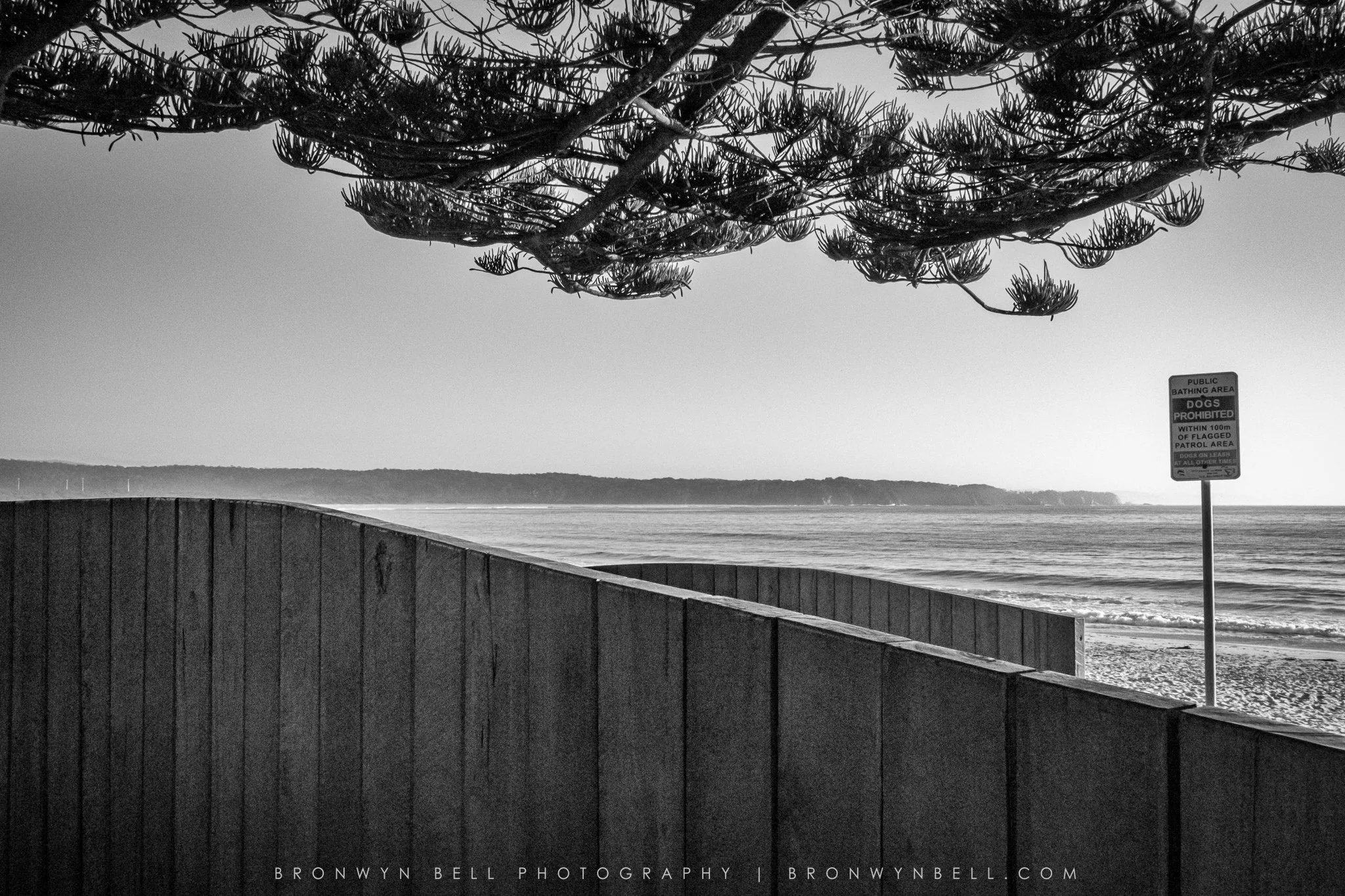
Tathra in monochrome
The coastline around Tathra is an excellent location for combining walking and photography. The changing landscape means there are opportunities for both wide coastal views and smaller details within the bushland. Starting around Tathra Beach and following the coastline towards the wharf and Kianinny Bay provides a good introduction to the area’s coastal landscape. If you stop and take photos along the, and have a drink at the Tahtra hotel, this walk will take about 1:30-2 hours. For photographers, the walk is as much about stopping to observe the light and composition as it is about reaching the destination. The combination of bushland, coastal viewpoints and ocean scenery makes the route an enjoyable way to explore and photograph the Tathra coastline.
