

Finding a comfortable and practical way to support a large telephoto lens is an important consideration for wildlife and nature photography. While handheld photography offers flexibility and freedom of movement, working with heavier lenses over extended periods can become tiring. This is particularly relevant when photographing wildlife, where having a stable yet responsive camera support system can make a considerable difference.
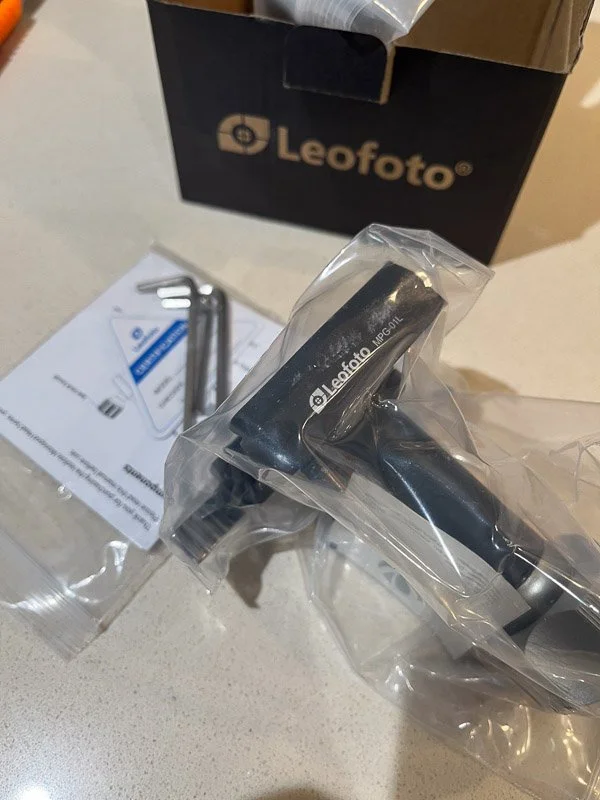
I recently added the Leofoto MPG-01L Mono Gimbal to my photography equipment as an alternative to handholding my Canon RF 100-500mm lens. Designed specifically for monopod use, this compact gimbal offers a way to support heavier camera and lens combinations while retaining the flexibility needed to follow moving subjects.
Although I have only tested the Leofoto MPG-01L at home so far, my initial impressions have been positive. The build quality, smooth panning mechanism and adjustable rotational friction have made it an interesting addition to my wildlife photography setup.

Build Quality and First Impressions
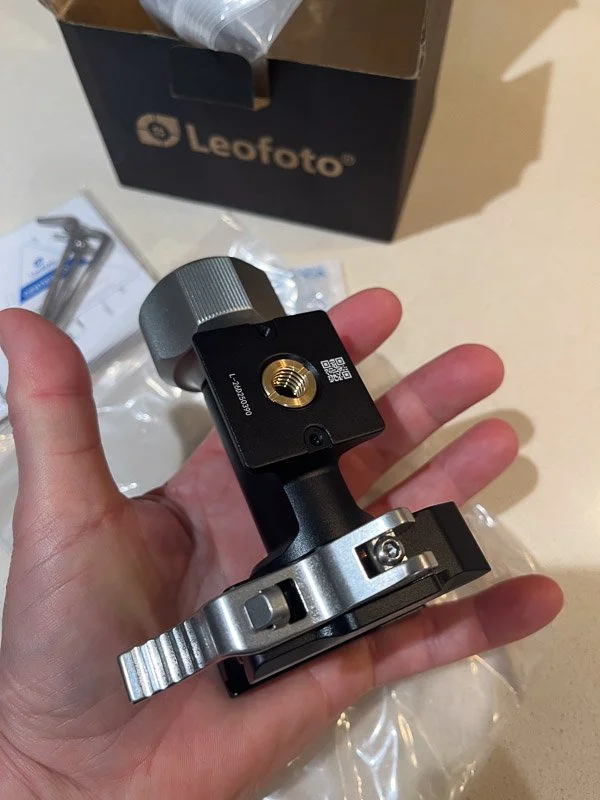
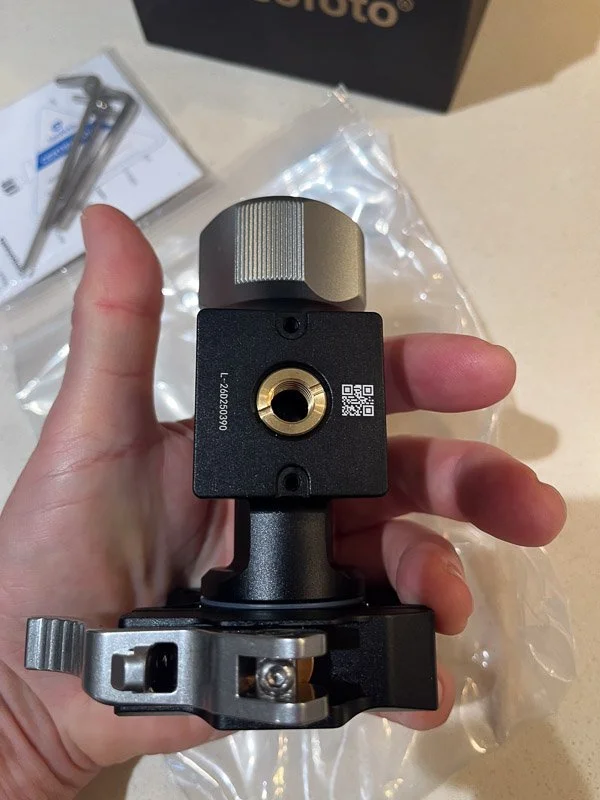
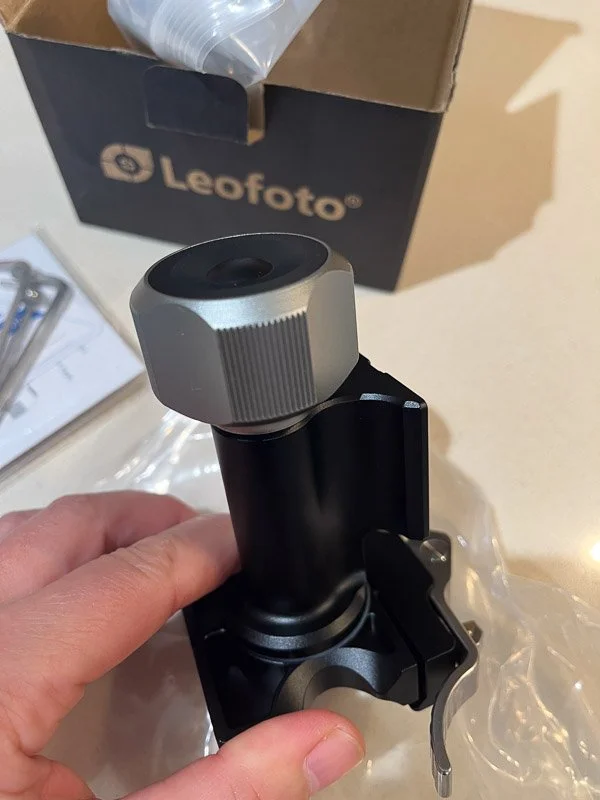
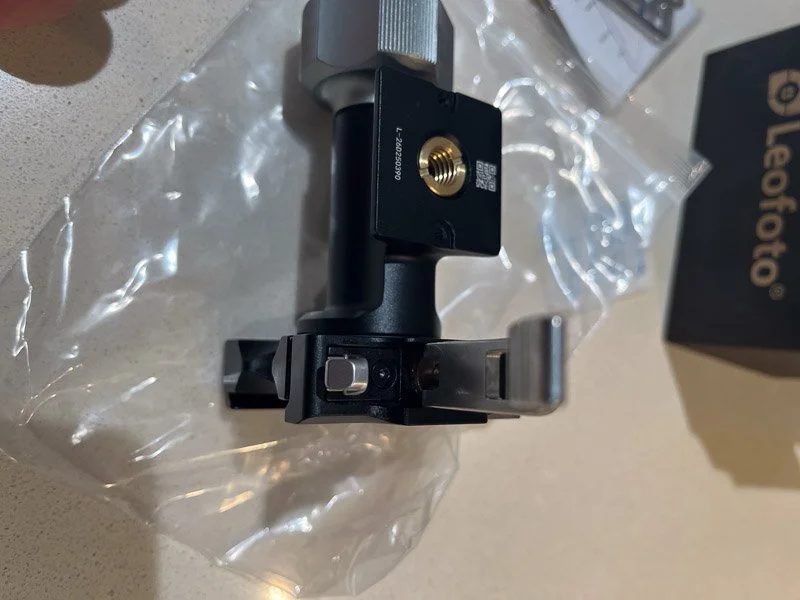
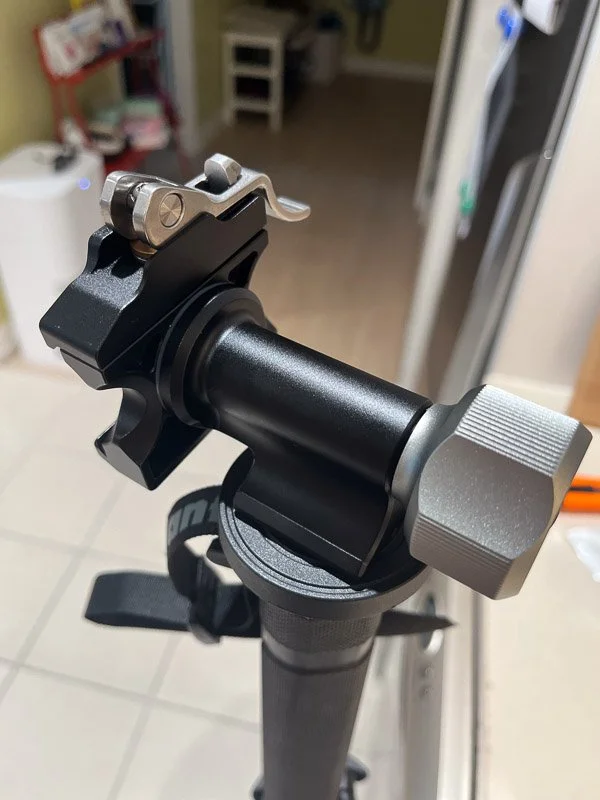
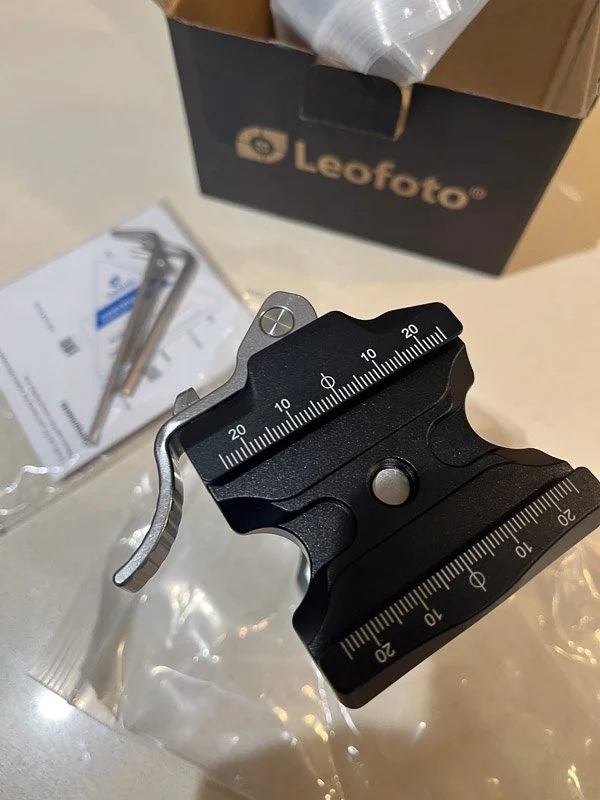
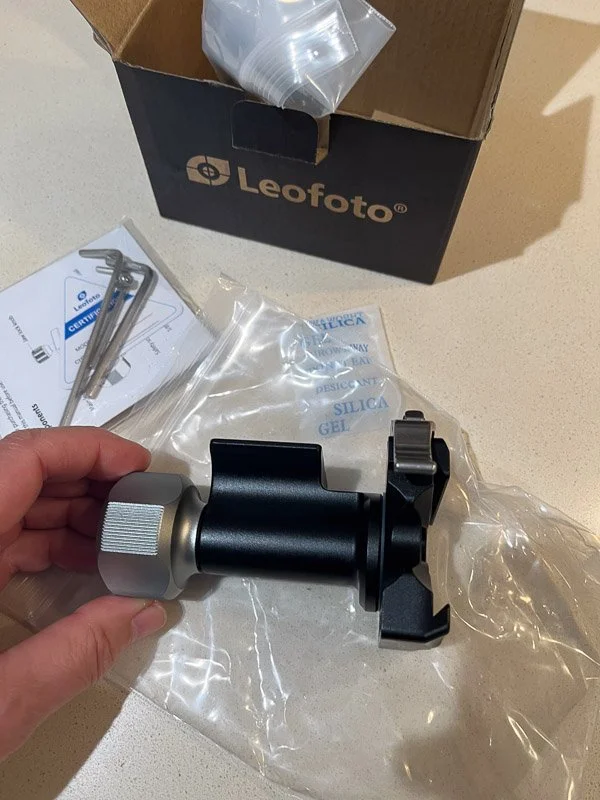
My first impression of the Leofoto MPG-01L is that it is a solidly constructed piece of equipment. The overall build feels reassuringly robust, which is important when supporting a camera and a relatively heavy telephoto lens. The design is compact and purpose-built for monopod photography. Rather than using a conventional ball head, the mono gimbal provides a dedicated mechanism for supporting the lens while allowing controlled horizontal movement.
One of the features that immediately stood out was the quality of the panning mechanism. The rotation is exceptionally smooth, and the adjustable friction dial provides a useful degree of control over how freely the gimbal moves.
Adjustable Panning and Rotational Friction
The rotational adjustment is one of the features I particularly like about the MPG-01L.
The friction adjustment dial allows the resistance of the panning movement to be increased or decreased. This means the rotation can be adjusted from quite stiff and controlled to a much freer, flowing movement.
I found that getting the friction setting right required a little experimentation. I adjusted it several times to find a comfortable level of resistance when using my Canon RF 100-500mm lens.
This adjustment is important because the ideal amount of friction will depend on the weight of the camera and lens combination, as well as personal preference. Too much resistance can make following a moving subject unnecessarily difficult, while too little can make the camera feel less controlled.
Having the ability to fine-tune this movement is a practical advantage, particularly for wildlife photography, where smooth tracking and controlled panning are often necessary.
Arca-Swiss Clamp and Lever Locking Mechanism
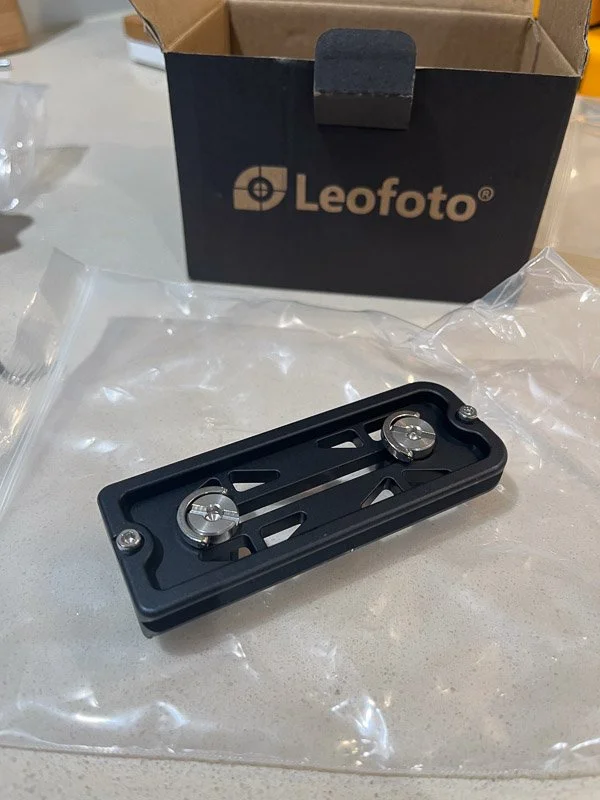
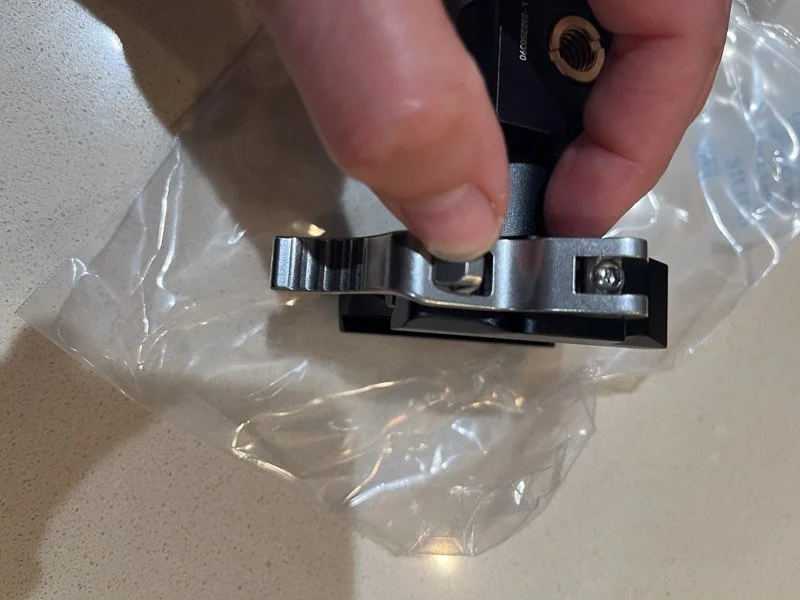
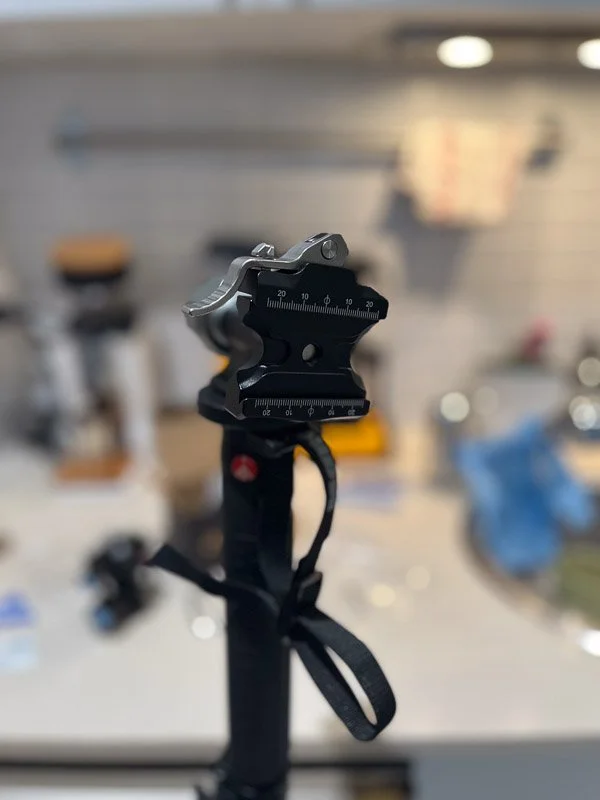
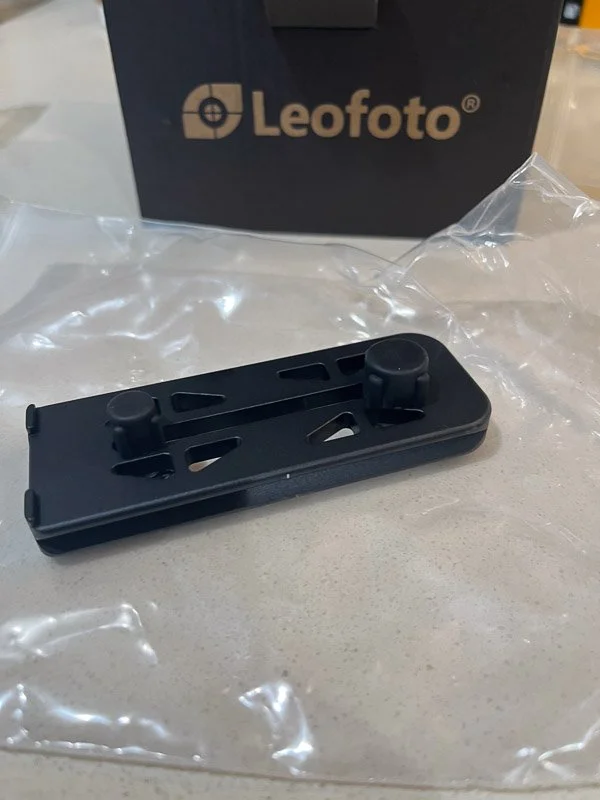
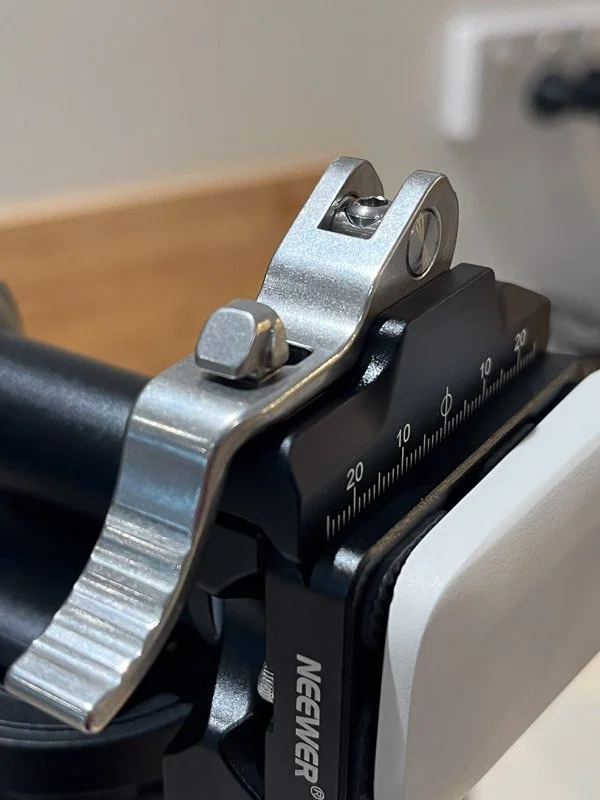
Another feature worth mentioning is the Arca-Swiss-compatible clamping system. The MPG-01L incorporates an Arca-Swiss-style clamp that provides a secure mounting point for a compatible camera or lens plate.
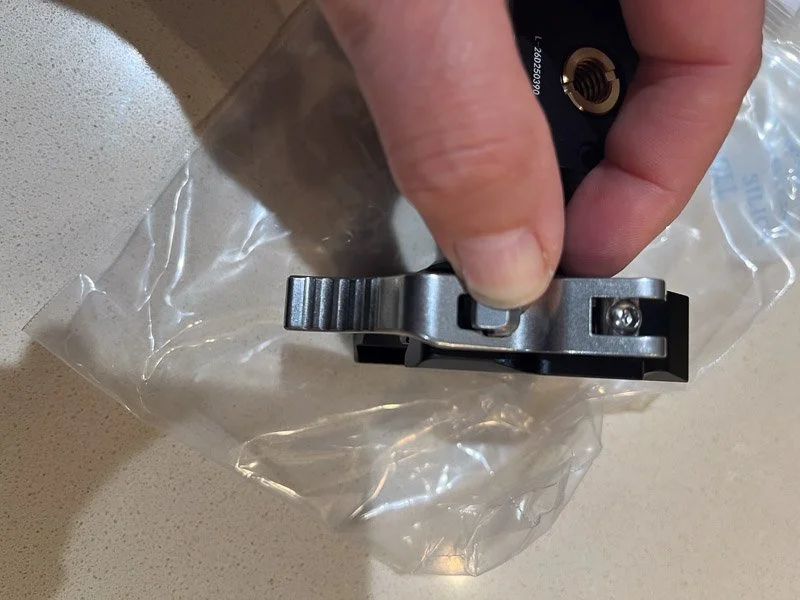
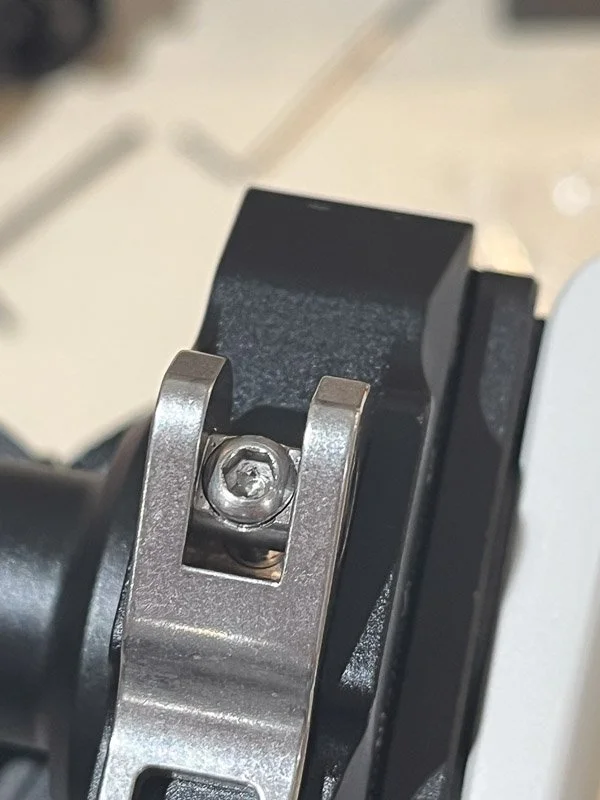
The clamp also features a lever locking mechanism, which secures the plate into position with a small spring-loaded catch.
I particularly appreciate this additional locking mechanism. When using expensive camera equipment and heavier telephoto lenses, security is an important consideration. Having a positive locking mechanism provides additional reassurance that the camera and lens are properly secured. It is a relatively small design feature, but one that I consider worthwhile when working with heavier photographic equipment.
My Setup: Leofoto MPG-01L and Manfrotto Monopod
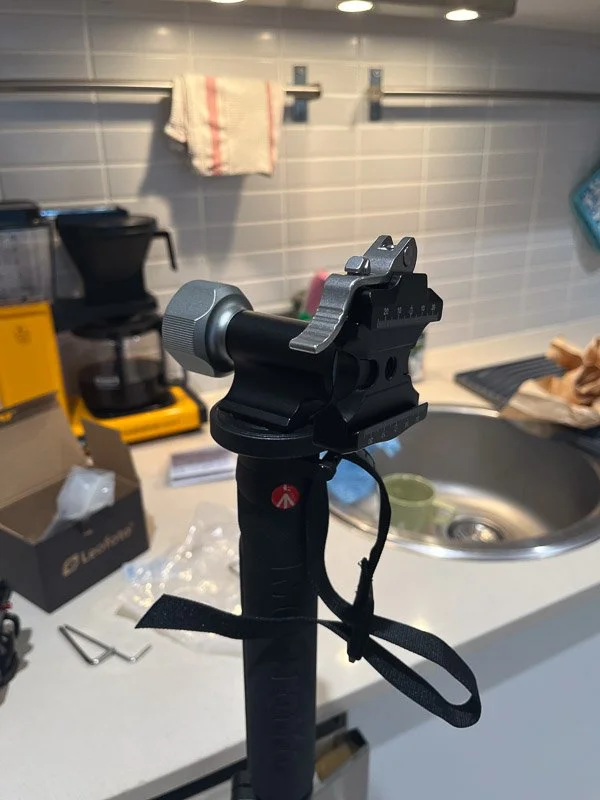
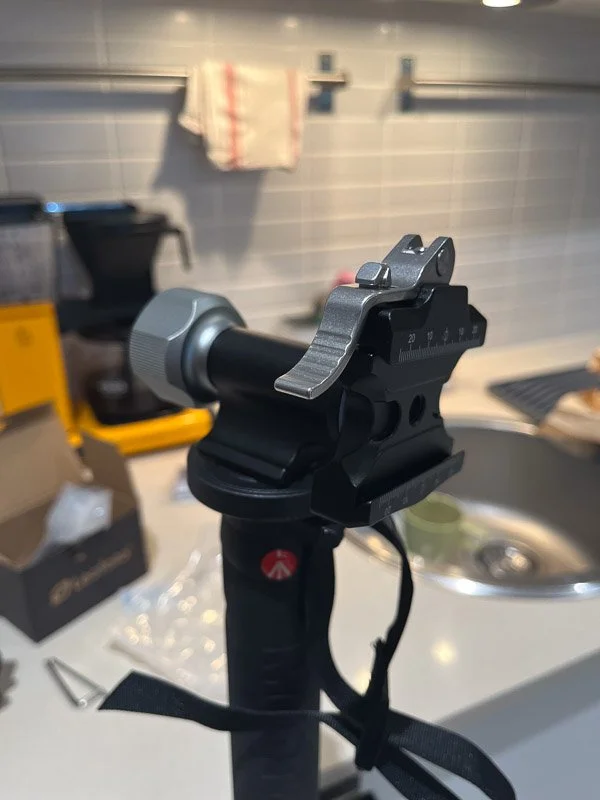
For my initial setup, I am using the Leofoto MPG-01L with a Manfrotto monopod featuring retractable feet.
This combination provides a practical platform for supporting my Canon RF 100-500mm lens. The monopod provides the main support, while the mono gimbal allows the camera and lens to move smoothly when adjusting the composition or following a subject.
The retractable feet on the Manfrotto monopod provide an additional level of support while retaining the portability and flexibility of a monopod system. I will be interested to see how this combination performs in the field, particularly when photographing birds and wildlife where subjects can move unpredictably and camera positioning needs to be adjusted quickly.
An Alternative to Handholding a Heavy Telephoto Lens
One of the main reasons for purchasing the Leofoto MPG-01L was to have an alternative to continuously handholding my camera with the Canon RF 100-500mm lens. Although the RF 100-500mm is a versatile lens for wildlife and nature photography, supporting the camera and lens for extended periods can become tiring, particularly when waiting for wildlife or working in situations where a subject may remain in one location for some time.
A monopod gimbal offers a useful middle ground between handheld photography and using a tripod with a conventional gimbal head. It provides additional support without significantly restricting movement, allowing the photographer to reposition the camera and follow subjects while maintaining support under the lens.
For wildlife photography, this combination of support and mobility is particularly appealing.
Initial Thoughts: Is the Leofoto MPG-01L Worth Considering?
At this early stage, my impressions of the Leofoto MPG-01L are positive. The solid construction, smooth panning movement and adjustable rotational friction make it an interesting option for photographers looking for a dedicated monopod gimbal. I particularly like the ability to adjust the rotational resistance to suit the weight of the lens and my preferred way of working.
The Arca-Swiss-compatible clamp and additional spring-loaded locking catch also provide reassurance when mounting expensive camera equipment. I have only tested the MPG-01L at home so far, so I am reserving judgement on its performance during extended wildlife photography sessions and in the field. However, as an alternative to handholding my Canon RF 100-500mm lens, it has already demonstrated some practical advantages.
My next step is to take the combination out for some wildlife and nature photography to see how it performs when tracking birds, following moving subjects and working in different shooting conditions. I will update this review after some field use, particularly with observations about handling, panning performance, stability and how comfortably the system works over longer photography sessions.
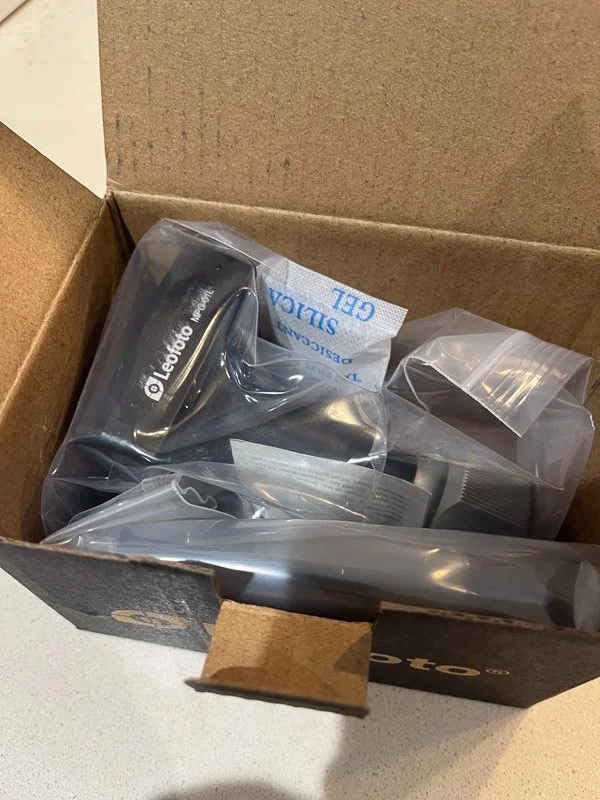
For now, the Leofoto MPG-01L looks like a promising addition to my wildlife photography equipment. I purchased directly from Leofoto Australia. Their shipping cost was quite reasonable for this size and weight package and shipped very quickly. I had opted for standard shipping, but Leofoto did ship it express (StarTrack) to me so it arrived the next day (Melb-Syd).
Equipment featured in this post:
Leofoto MPG-01L Mono Gimbal
Manfrotto monopod with retractable feet
Canon EOS R6 Mark III
Canon RF 100-500mm telephoto lens
