

Tathra: The Quiet before Summer in shapes and shadows.
A recent trip down the south coast of New South Wales led me to Tathra.
Before I even picked up my camera, I had decided that this series of images was going to be Black and White. So I shot with that imagery in mind, looking for shapes and shadows.
Tathra, on the far south coast of New South Wales, is a place where the relationship between town and ocean is impossible to overlook. Built around the sheltered waters of Tathra Bay, the small coastal community sits between rocky headlands, native bushland and a long sweep of golden sand. At sunrise, however, the familiar holiday character of the town takes on a quieter quality. In winter, before the cafés open and the beach begins to fill, the first light moves slowly across the sand, casting long shadows and revealing details that are easily overlooked during the busy summer months. This black and white series was photographed during those early hours, when Tathra feels suspended between seasons.
Tathra’s history is closely connected to the sea. The area was traditionally home to the Yuin people, whose cultural connection to the coastline extends back thousands of years. European settlement developed during the nineteenth century, with the harbour and surrounding coastline becoming important to the timber and agricultural industries of the region. One of Tathra’s most distinctive reminders of this history is Tathra Wharf, which dates from the nineteenth century and became an important landing place for steamers carrying passengers, produce and supplies along the coast. The wharf remains one of the defining landmarks of the town, extending out into the waters of Tathra Bay and providing a strong visual connection between the town’s past and its continuing relationship with the ocean.
Before Summer Returns
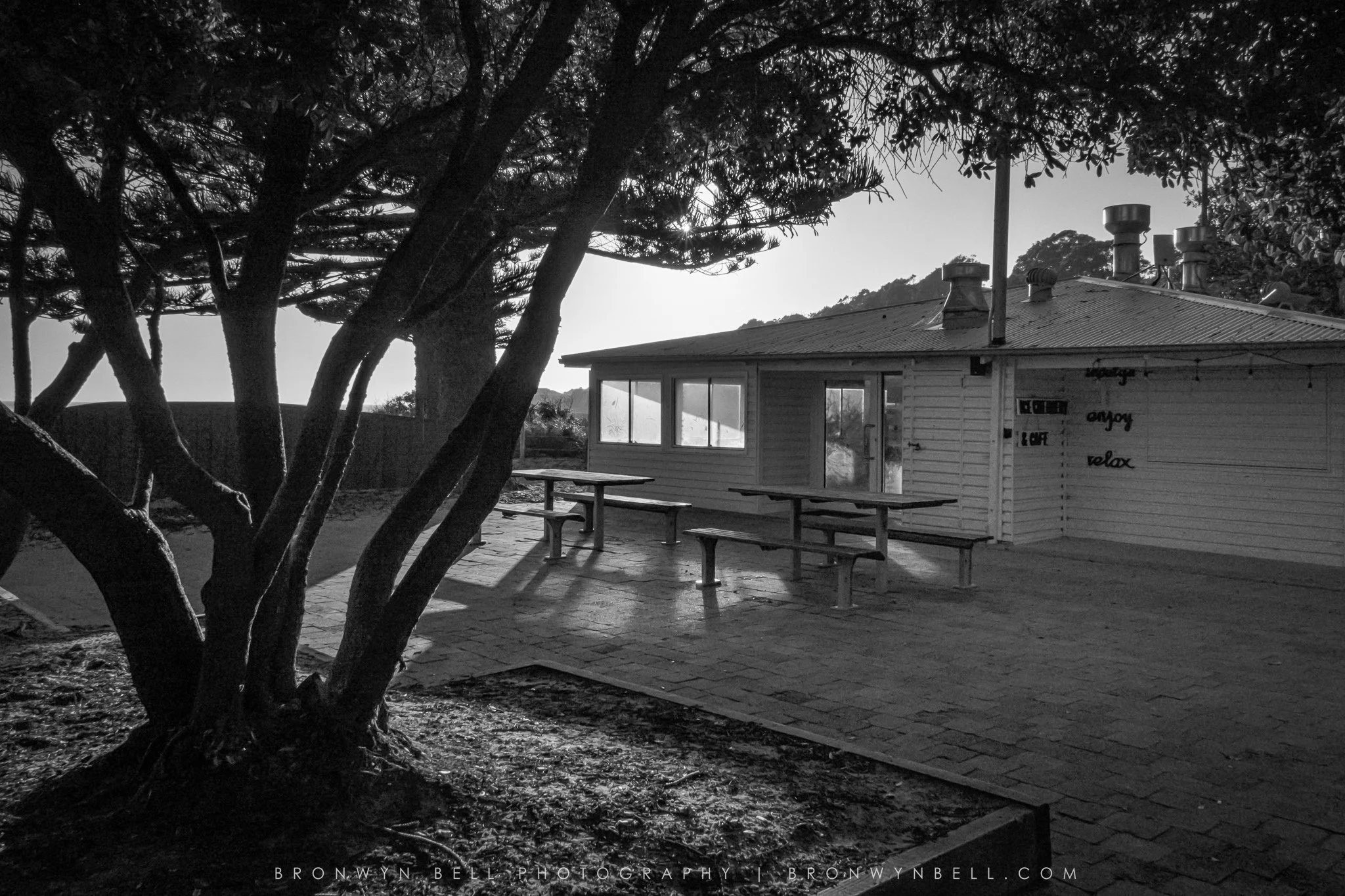
Morning light passes through the salt-streaked windows of Tathra’s beach café. Closed for winter, the room still holds the traces of summer — tables, chairs and the quiet remnants of days spent beside the sea.
The café beside Tathra Beach provides another, much more ordinary record of the town’s seasonal rhythm. During summer, the building becomes part of the daily life of the beach: people arriving for coffee, food and conversation after time in the water. In winter, the same space becomes almost architectural. Sea spray and salt have accumulated on the windows, diffusing the sunlight and turning the glass into a translucent screen. Through it, tables, chairs and the remnants of the previous season remain visible. The effect is particularly suited to black and white photography, where the distinction between light, shadow, glass and interior becomes more important than colour.
Salt on the Glass
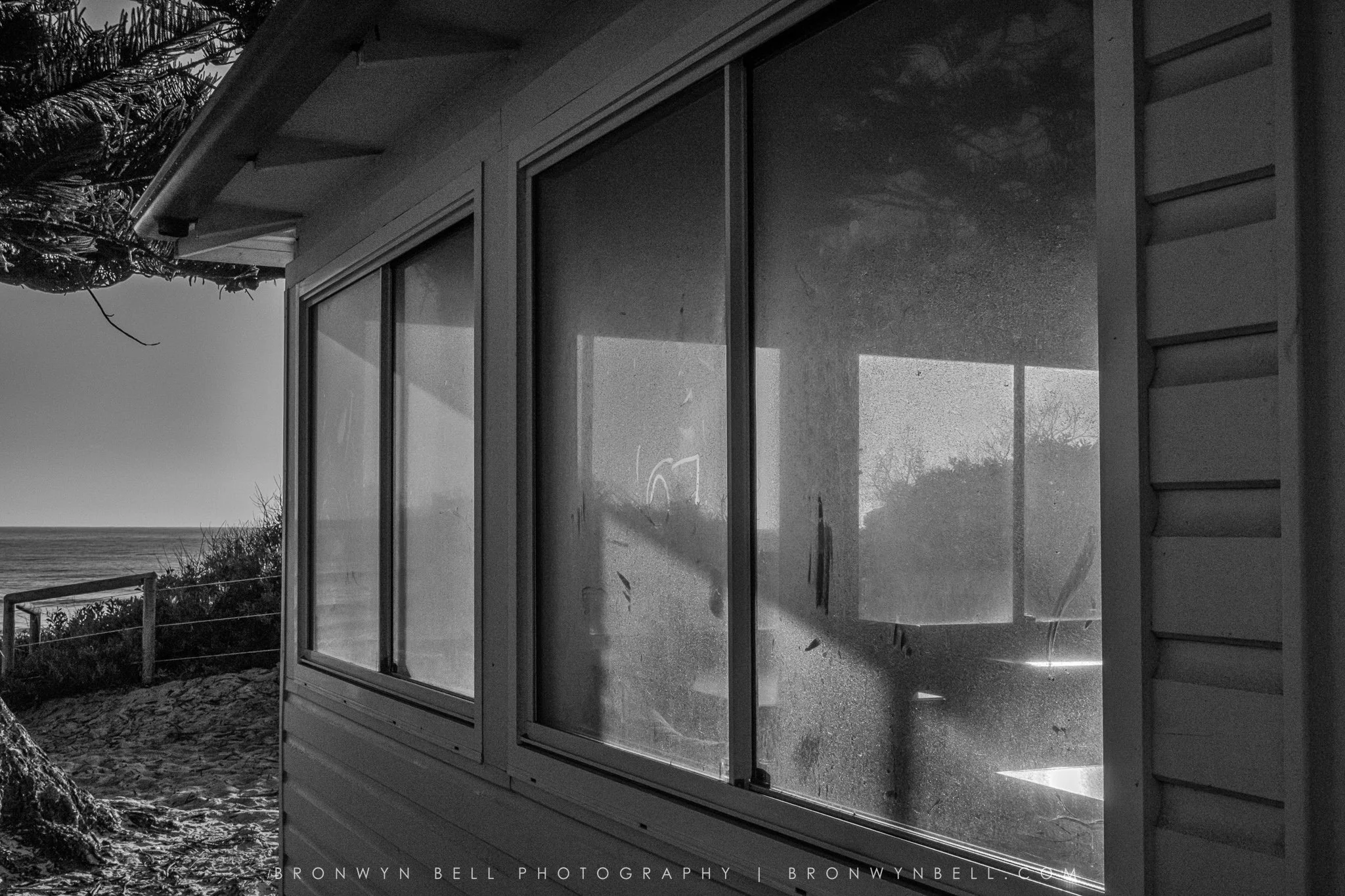
Sea spray and salt have softened the windows into a veil of light. Beyond the glass, the café waits patiently for the return of warmer days and the people who will once again fill its tables.
Around Tathra, the landscape changes quickly from the built environment to coastal bushland and open ocean. Tathra Beach stretches north from the town, while rocky headlands and elevated coastal viewpoints provide changing perspectives over the bay. The surrounding coastline is part of the broader Sapphire Coast, an area known for beaches, cliffs, forests, lagoons and marine environments. Nearby places such as Mimosa Rocks National Park and Bournda National Park provide opportunities to explore the less developed side of the coastline, with walking tracks leading through coastal heath, woodland and headland landscapes. For photographers, the combination of exposed coastline, native vegetation and changing weather makes the region particularly rewarding around the edges of the day.
Between Seasons
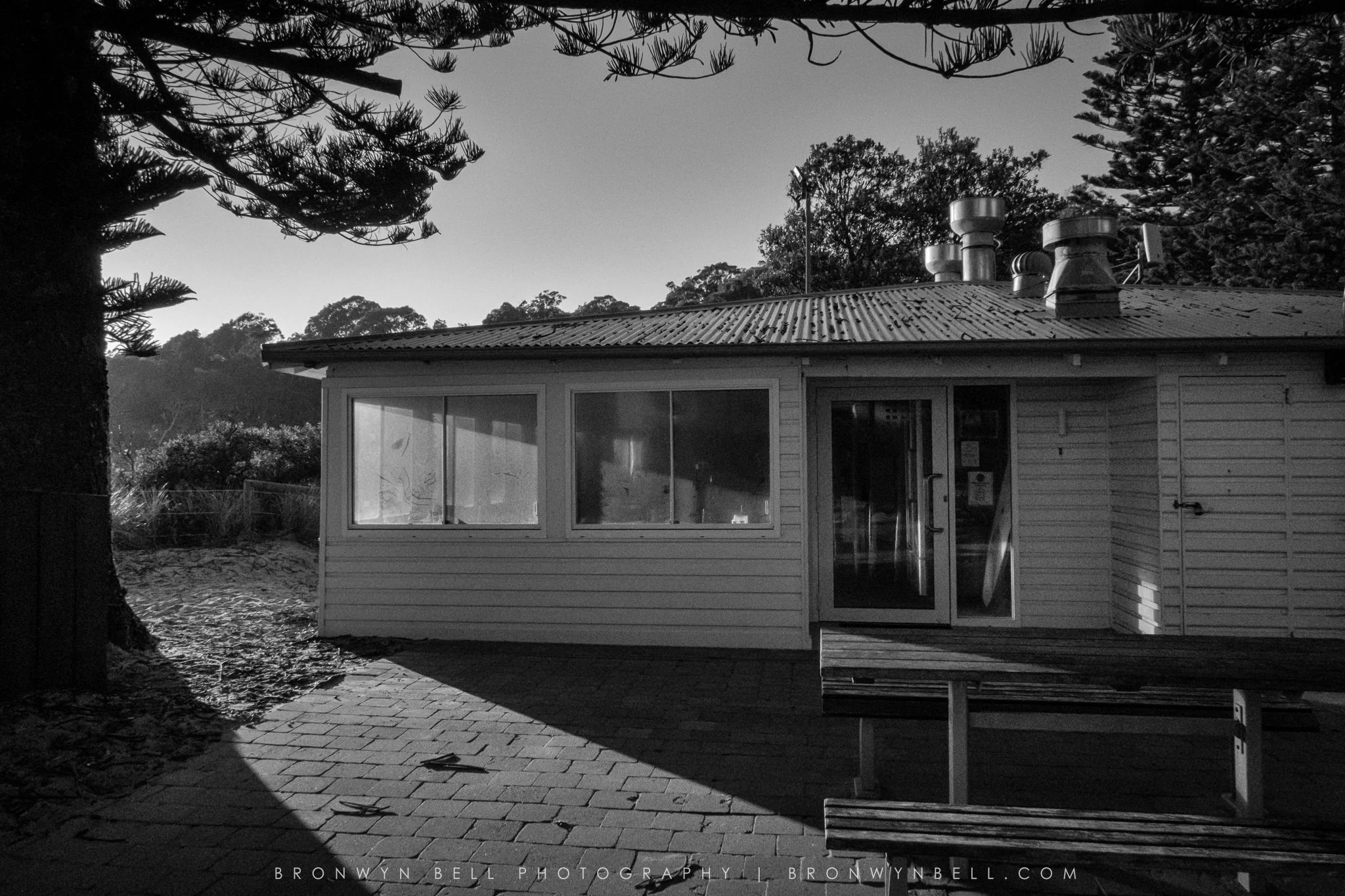
Long shadows fall across an empty café as the first sunlight of the day reaches the beach. Summer has passed, winter remains, and the building sits quietly between the two.
The beach itself changes character dramatically depending on the hour. At sunrise, the low angle of the sun creates long shadows across the sand and emphasises small details in the landscape. Early swimmers sometimes leave their shoes and belongings near the beach access points while they enter the water, creating fleeting still-life arrangements that disappear as the morning develops. These small traces of human activity became another focus of this series: objects that say something about the people who use the beach without showing the people themselves.
Nothing but the Sea
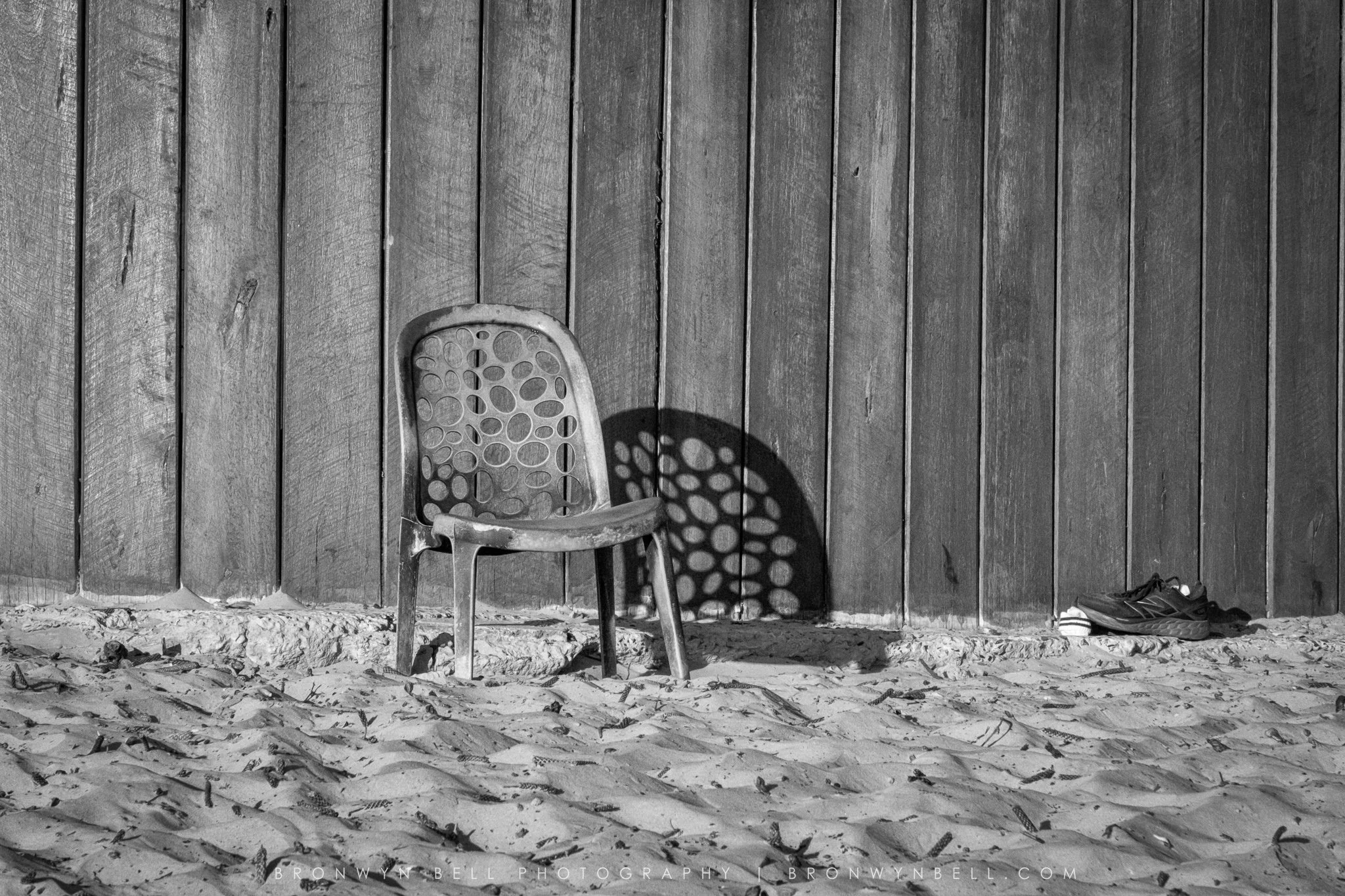
A lone chair and a pair of shoes wait beside the beach fence. Someone has left almost everything behind for an early morning swim, carrying only what is needed to meet the water.
Tathra is approximately 550 kilometres south of Sydney and around 25 kilometres south of Bega. By road, the most direct approach from Sydney is generally south via the Princes Highway, passing through Wollongong, Nowra, Batemans Bay and Narooma before continuing towards Bega and turning east towards Tathra. From Canberra, the journey is considerably shorter, taking the Monaro Highway towards Cooma before continuing towards the Sapphire Coast. The drive from Sydney is a substantial journey, but it forms part of the appeal of the region: Tathra is far enough from the major metropolitan centres to retain the atmosphere of a small coastal community. The nearest major regional airport is at Merimbula, making air travel another option for visitors travelling from further afield.
First Light on Tathra Beach
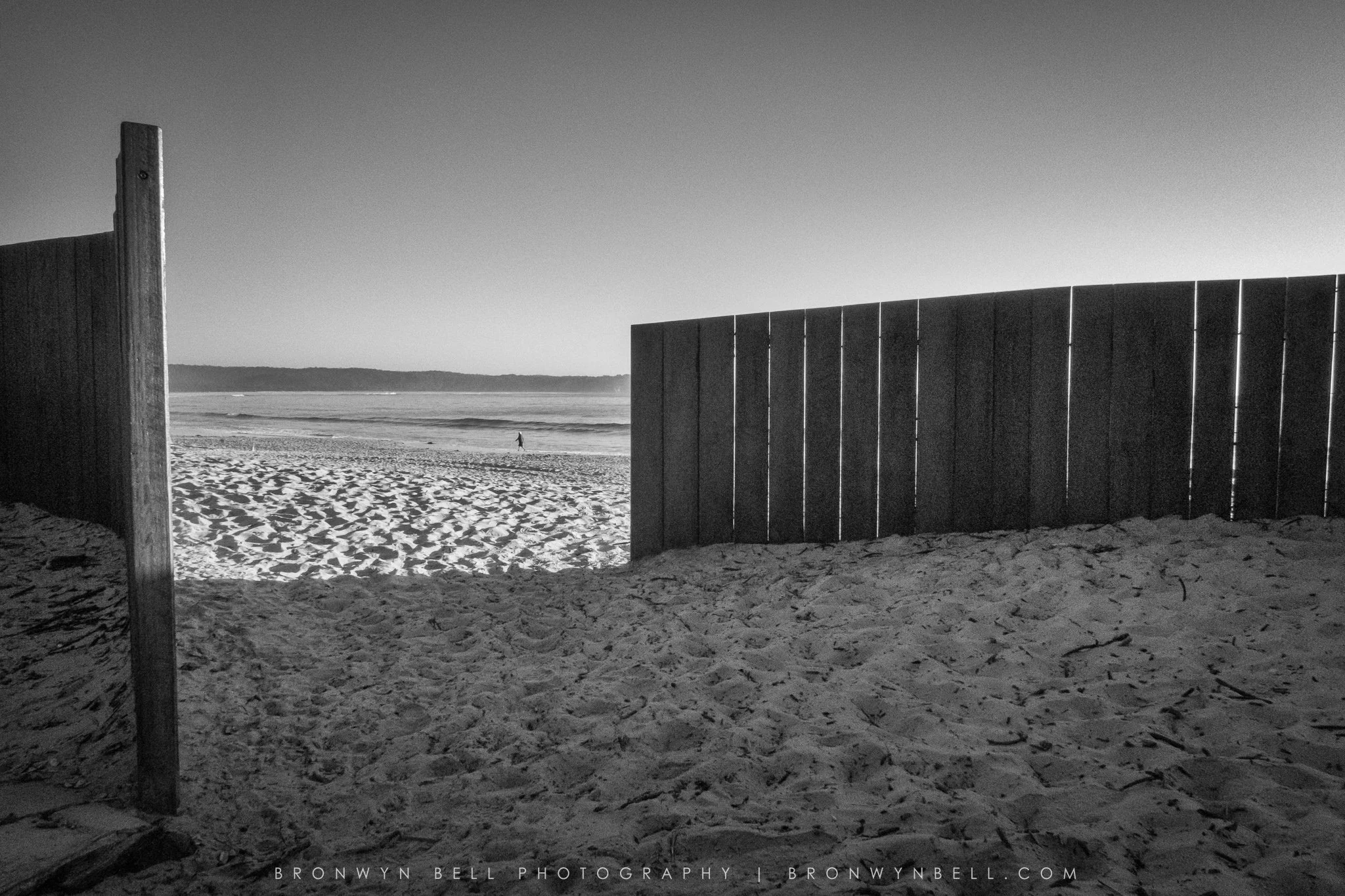
The early sun stretches long shadows across the sand at Tathra Beach. Before the day begins, the shoreline is still , a brief, quiet moment between night and the arrival of the first swimmers.
For photographers, sunrise is one of the best times to experience Tathra. The low winter sun produces long shadows across the beach, while the angle of the light can reveal textures in the sand, weathered timber, salt-covered glass and the surfaces of the old buildings around the foreshore. The town also rewards slower observation. Rather than looking only for grand coastal vistas, there are smaller stories everywhere: a chair left beside a fence, footprints disappearing towards the water, an empty café waiting for summer, or sunlight passing through a salt-covered window. These details give the landscape a sense of time and place.
Waiting for the Morning
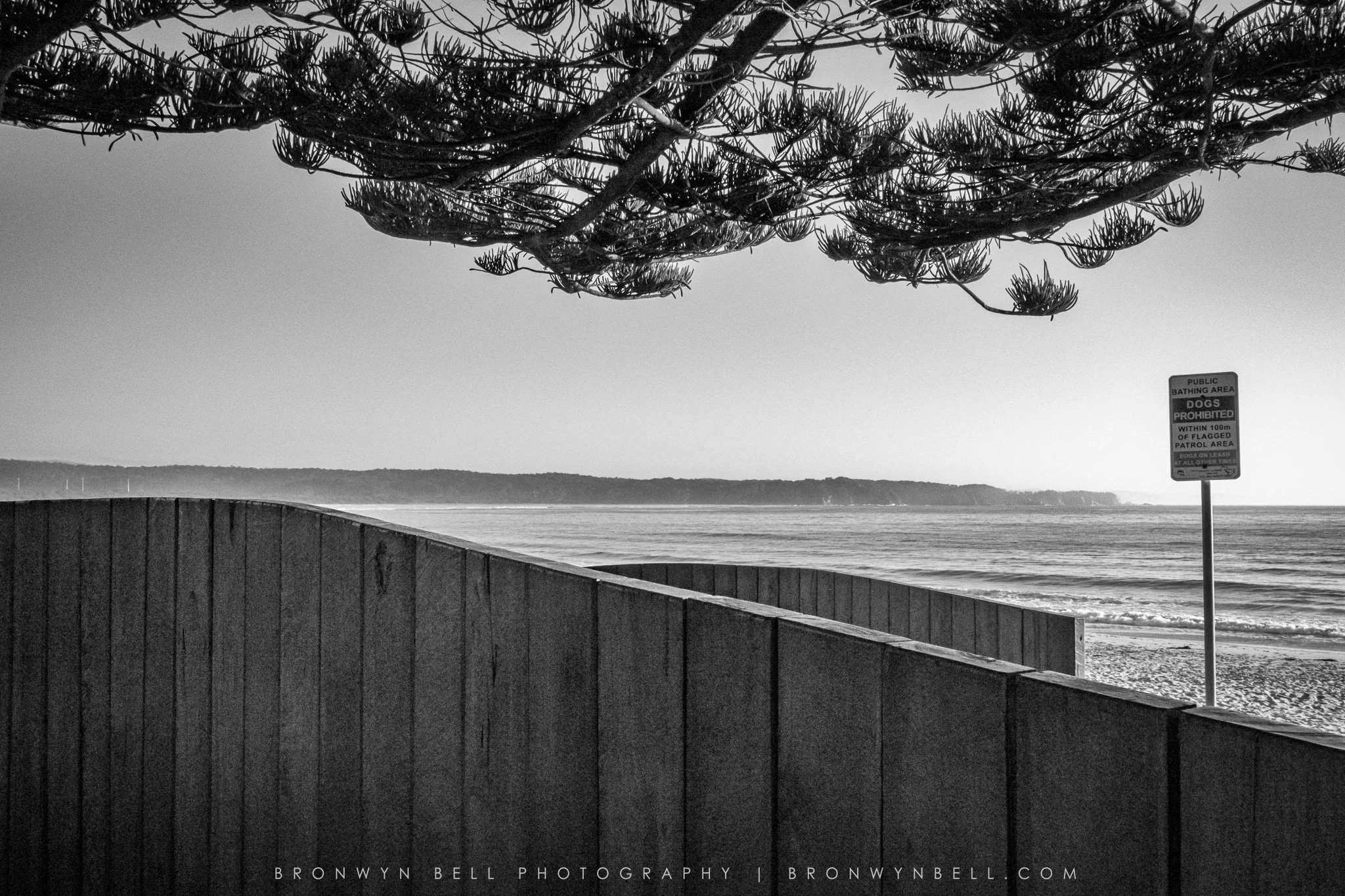
Tathra Beach emerges slowly from the shadows as sunlight moves across the sand. The familiar structures of summer remain, but for a moment the beach belongs only to the morning, the sea and those arriving before the day begins.
Taken together, these six photographs are less a record of Tathra as a tourist destination than an observation of the town in a particular moment — early morning, winter and between seasons. The black and white treatment strips away the familiar coastal colours and places greater emphasis on light, texture and shadow. The photographs suggest a Tathra that exists alongside the busy summer destination: quieter, weathered and reflective, but still closely connected to the ocean. As the sunlight strengthens and the first people arrive on the beach, the stillness begins to disappear. Another day starts, and Tathra returns to the rhythm that has shaped this small coastal town for generations.
