

If you invest in camera bodies, lenses and photographic accessories, protecting that equipment when it is not being used is just as important as looking after it when you are out photographing. One thing that can be particularly damaging to photographic equipment over time is moisture, especially when it comes to the development of fungus inside camera lenses.
After discovering that some of my older lenses had started to develop fungus, I decided it was time to invest in a dedicated photography dry cabinet. My camera equipment had generally been stored in camera bags, which were then placed inside cupboards. While this seemed like a reasonable way to keep everything protected, it probably wasn’t the best long-term storage solution.
I eventually settled on the Wonderful DD-129CH Digital Dry Cabinet, a five-tray cabinet with adjustable digital humidity control and enough storage capacity for camera bodies, lenses, batteries, filters and other electronic equipment.
I’ve now been using it for approximately a month, and these are my initial impressions.

Why I Decided to Buy a Camera Dry Cabinet
The main reason for purchasing a dry cabinet was the condition of some of my older camera lenses. Over the years, these lenses have been used in a variety of environments, including coastal locations, humid conditions and overseas travel. I’ve photographed seascapes, worked in changing weather conditions and travelled to places such as Singapore and New York during summer, where humidity can be particularly high. Some of these lenses have also been exposed to mist, moisture and significant temperature changes. They weren’t necessarily professional-grade lenses with the more extensive weather sealing found on some modern equipment. Over time, I started noticing signs of fungus developing in a couple of them.
Lens fungus is something photographers should take seriously. Fungal growth can develop inside optical equipment when moisture and environmental conditions are favourable. Depending on the extent of the growth, it can affect image quality and, in more severe cases, permanently damage optical coatings.
It made me reconsider how I was storing my equipment.
Previously, I would generally clean my lenses after use, put them back into my camera bag and store the bag in a cupboard. However, a camera bag stored inside a cupboard isn’t necessarily providing the best environment for long-term equipment storage. A dedicated camera dry cabinet seemed like a sensible investment, particularly now that I’m using newer and more expensive camera bodies and lenses.
The Wonderful DD-129CH Digital Dry Cabinet
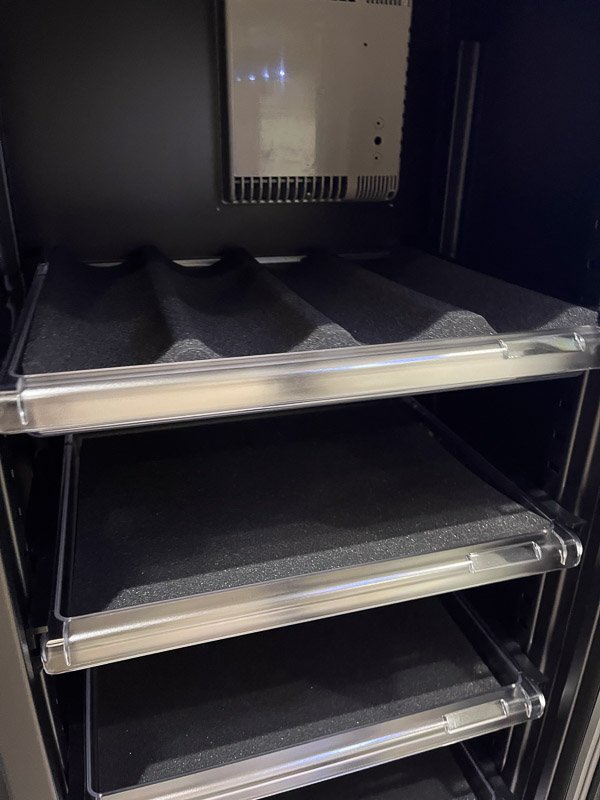
The model I purchased is the Wonderful DD-129CH, a digital dry cabinet with a storage capacity of approximately 122 litres and five adjustable storage trays. It is designed for storing photographic equipment and other moisture-sensitive items, including cameras, lenses, electronic accessories and optical equipment. Some of its main features include:
Five adjustable storage trays.
Approximately 122-litre storage capacity.
Digital humidity control.
Backlit LCD humidity display.
Integrated LED cabinet lighting.
Adjustable humidity settings.
Glass front door with a sealing mechanism.
Lockable door.
The cabinet is designed to maintain a controlled relative humidity environment, rather than simply providing enclosed storage. This is the main advantage over keeping photographic equipment in a conventional cupboard or camera bag.
Unboxing and Setting Up the Cabinet
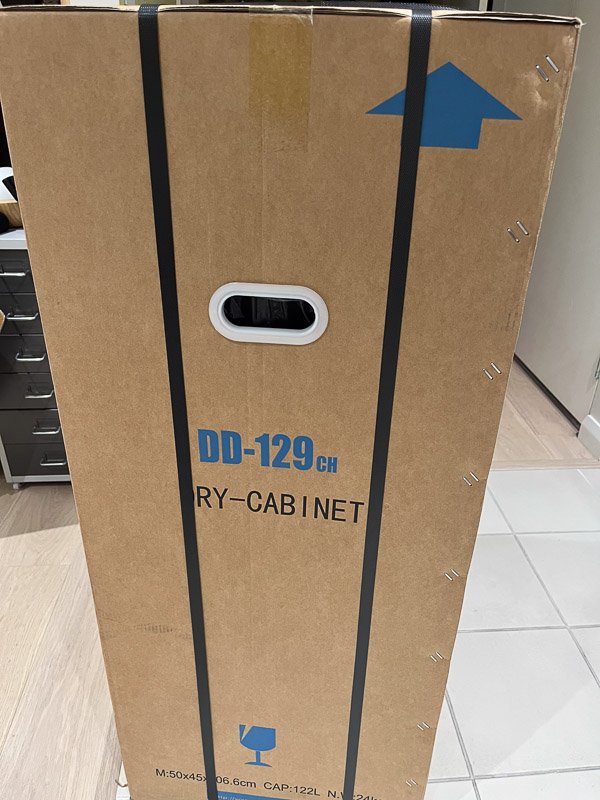
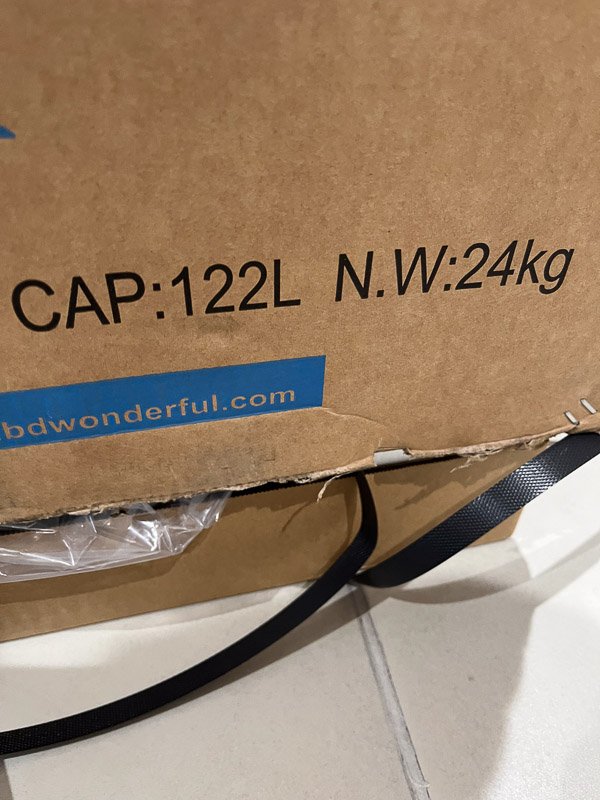
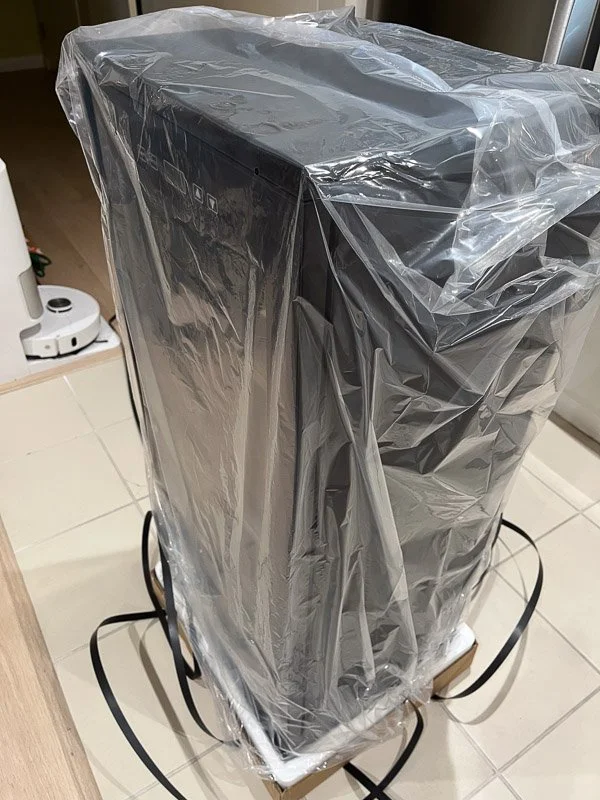
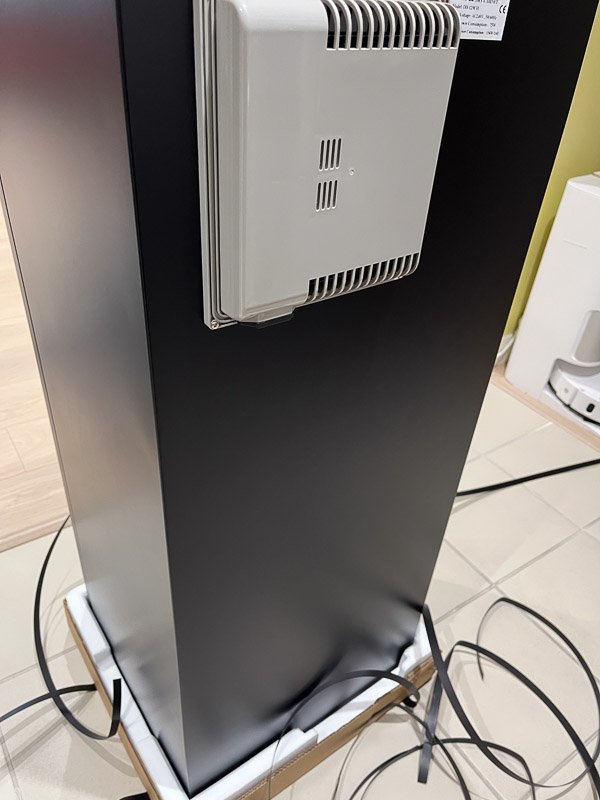
One thing I appreciated about the Wonderful DD-129CH was how straightforward the delivery and unpacking process was. The cabinet arrived well packaged, with sufficient protection to keep it secure during transport. The packaging was also thoughtfully designed to make unpacking relatively easy. The bottom section of the cardboard box is pre-cut, which means you can position the cabinet upright, remove the upper section of the packaging and lift it away. The cabinet is then exposed, wrapped in protective plastic.
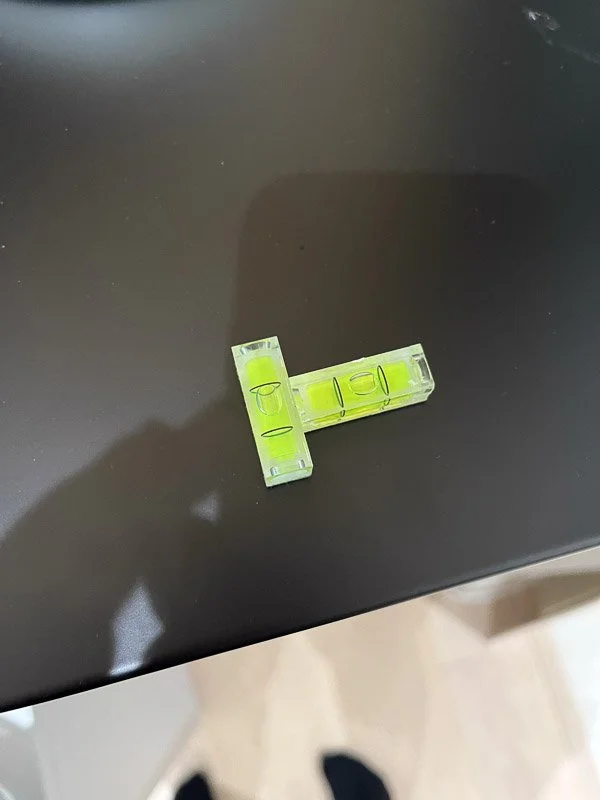
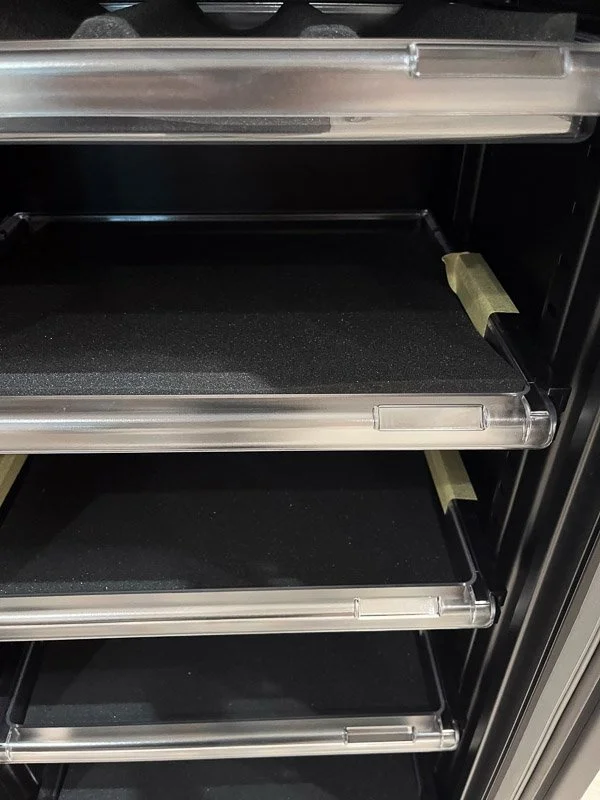
After removing the plastic covering, there was just a little protective tape securing the shelves that needed to be removed. It was a relatively simple process, and I was able to get the cabinet into the house without too much difficulty. The cabinet itself is surprisingly light for its size. It is well constructed, with a solid metal body and a glass front door. The adjustable feet underneath are useful for getting everything level, which is something I recommend doing before loading the cabinet with your equipment. Once positioned, it was simply a matter of plugging it into the power outlet and setting the desired humidity level.
How the Digital Humidity Control Works
One of the main reasons for choosing the DD-129CH was its digital humidity control. Rather than relying on moisture-absorbing packets or silica gel that need to be periodically replaced or regenerated, the cabinet incorporates an electronic dehumidification system.
The system uses a moisture-absorbing element within the dehumidification unit. It draws moisture from the air inside the cabinet and helps maintain the selected relative humidity level. The moisture-absorbing mechanism periodically regenerates, allowing the system to continue operating without the need for conventional disposable desiccant packs. The digital controller monitors the humidity inside the cabinet and regulates the dehumidification process to maintain the selected setting.
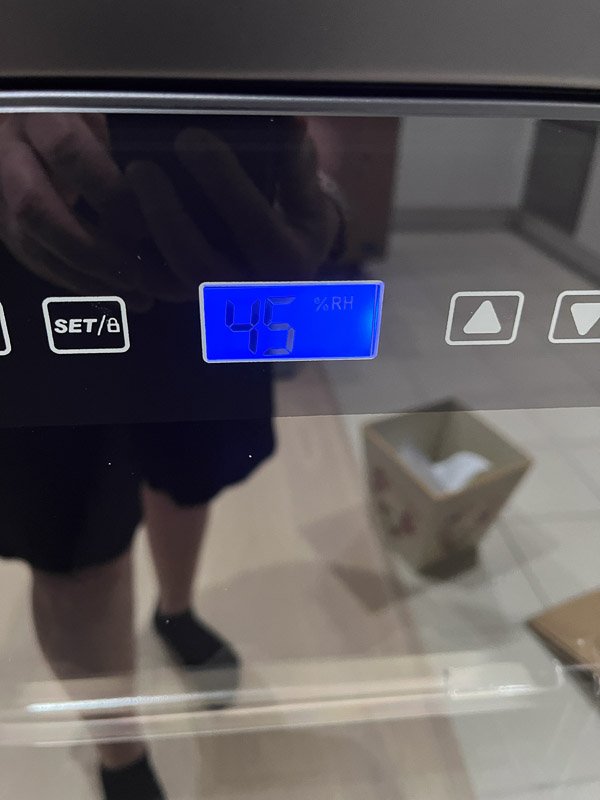
On the front panel, you can see the current humidity reading and adjust your preferred humidity level.
Setting it up is quite straightforward. Press the SET button and use the up and down arrow buttons to select your desired humidity level. I decided to set mine at 45% relative humidity (RH).
This is a setting that sits within the commonly recommended storage range for photographic equipment. It provides a reasonably dry environment without going to unnecessarily low humidity levels. The control system is designed to maintain the selected humidity within approximately ±5% RH, so it is worth understanding that the displayed humidity will not remain fixed at precisely the number you select.
Setting the Cabinet to 45% Humidity
When I first switched on the cabinet, I was interested to see how quickly it would reach the humidity level I had selected. It certainly wasn’t an immediate process. Initially, the humidity reading was around 90%, and it gradually worked its way down through the 80% range. I left it operating overnight, and when I checked it the following morning, it had reached approximately 45%. So, if you purchase one of these cabinets, don’t expect it to reach your selected humidity immediately. Give it some time to establish the desired environment, particularly when it is first switched on.
I’ve now had the cabinet for approximately a month, and it has been maintaining humidity reasonably consistently around my selected 45% setting. I’ve noticed the display fluctuate between approximately 42% and 50% throughout the day and over the course of the week. I don’t find this particularly concerning. The cabinet is designed to regulate humidity within a tolerance rather than maintain an absolutely fixed reading.
For comparison, I also have a small digital humidity gauge that I purchased from Amazon. It generally indicates that the humidity inside my home sits around 60%. It isn’t a professionally calibrated instrument, so I’m not treating its readings as precise measurements, but it does provide a useful indication of the general conditions in my home. Even though I don’t live in an area particularly renowned for high humidity, I think maintaining a more controlled storage environment is worthwhile, especially when considering the cost of replacing photographic equipment.
Opening the Door and Understanding Humidity Fluctuations
One thing I’ve noticed since using the cabinet is how quickly the humidity reading can change when the door is opened. The front door has a reasonably substantial seal around it, which reminds me a little of the seal you would find on a refrigerator. It closes firmly and feels well fitted. I wouldn’t describe the cabinet as vacuum sealed, but it does appear to provide a good enclosed environment.
Naturally, every time you open the door, some of the drier air inside escapes and is replaced by air from the surrounding room. Depending on the humidity in your home, this can cause the internal reading to rise temporarily.
There is also a tendency, particularly when something is new, to keep opening the door to have a look at everything inside! I’ve found that frequent opening can cause the humidity reading to fluctuate, so it’s worth being a little disciplined about how often you access the cabinet. Once you have everything organised, it becomes much easier to open the door, retrieve what you need and close it again.
Storage Capacity: Plenty of Room for Camera Equipment
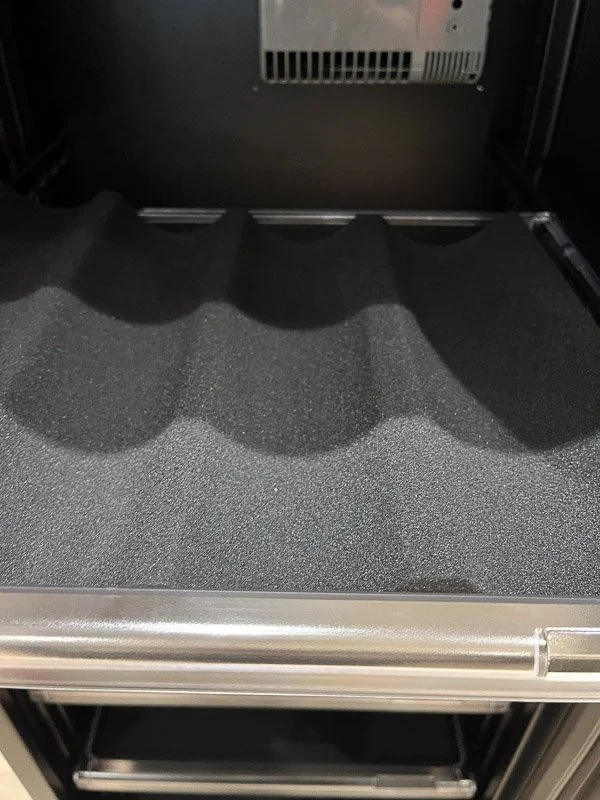
The DD-129CH has five storage trays, and I’m finding there is considerably more room inside than I initially expected. I could probably have opted for a smaller model, but I’m glad I chose the larger cabinet. At the moment, I’ve got two camera bodies, several lenses, a drone, batteries, photographic filters and various smaller accessories stored inside. There is still room for additional equipment.
I’ve also found myself putting other electronic accessories in there, including USB accessories and earphones. These are the sorts of items that can also benefit from being stored in a controlled environment, particularly if they have been exposed to moisture during travel or outdoor use. For photographers who regularly work outdoors, in coastal environments or in humid conditions, having somewhere to store equipment when returning home is a practical advantage.
The adjustable shelving also makes it easier to organise different types of equipment. You can arrange the shelves to accommodate larger lenses, camera bodies and smaller accessories without wasting too much space.
Additional Features I Like
There are a few smaller design features that I’ve come to appreciate:
Integrated LED Lighting
The cabinet has an integrated LED light that illuminates the interior. It’s a useful addition, particularly when looking for smaller accessories or checking which lens you’ve stored on a particular shelf.
Lockable Door
There is also a small locking mechanism on the door. I wouldn’t consider this a particularly high-security feature, especially given the glass front, but it does provide a basic level of access control and helps keep the door secured.
Adjustable Feet
The adjustable feet underneath the cabinet are useful for levelling it properly. Given that the cabinet is relatively tall, I think it’s worth spending a little time getting it positioned correctly before loading it with equipment.
Well-Constructed Door and Seal
The glass door and surrounding seal feel reasonably substantial. Being able to see the equipment inside without opening the cabinet is also convenient, particularly when checking whether everything is where it should be.
How I Organise My Camera Equipment Now
One unexpected consequence of purchasing the dry cabinet is that my camera backpack is now empty!
Previously, I would leave my camera gear in the backpack after returning from a photography trip. Now, everything has its own place inside the cabinet.
I’ve organised my equipment so that my camera bodies, lenses, batteries and filters are all stored together.
This is actually quite convenient because everything is in one location. When preparing for a photography outing, I can check what I need and pack my camera bag accordingly.
The downside is that I can no longer simply pick up my already-packed camera backpack and head out the door. I now need to spend a little time packing everything before leaving. However, I think this is a reasonable trade-off. It also gives me an opportunity to check batteries, filters and other accessories before heading out.
Is a Photography Dry Cabinet Worth It?
For me, the decision to purchase a dry cabinet came down to protecting my photographic equipment over the longer term. Discovering fungus in some older lenses was a reminder that equipment storage is something worth paying attention to. While I cannot say exactly when or how the fungus developed, I suspect that storing lenses in camera bags inside cupboards wasn’t necessarily providing the best environment.
A dedicated dry cabinet provides a more controlled storage environment and helps reduce the conditions that encourage fungal growth. It is also worth remembering that a dry cabinet isn’t a substitute for cleaning and properly drying equipment after use. If you have been photographing in wet or humid conditions, allow equipment to dry appropriately before storing it.
For photographers who regularly work in coastal environments, tropical locations or areas with higher humidity, I think a dry cabinet is a particularly useful addition to their equipment storage arrangements. Even if you live somewhere with relatively moderate humidity, it can provide some additional reassurance when storing expensive cameras and lenses.
Final Thoughts: My First Month with the Wonderful DD-129CH
After approximately one month of use, I’m very happy with the Wonderful DD-129CH Digital Dry Cabinet.
It is well built, relatively lightweight for its size, straightforward to set up and offers plenty of storage capacity for my photographic equipment. The digital humidity control is easy to operate, and I’ve been pleased with how it maintains the internal humidity around my selected 45% setting.
I particularly like having all my camera equipment, batteries, filters and accessories stored together rather than leaving everything inside camera bags and cupboards. Of course, the real test will be over the longer term. I purchased this cabinet because I want to protect my newer camera equipment and avoid the problems I’ve experienced with some of my older lenses.
It will be interesting to see how things look after another year or two of using the cabinet, particularly as I continue photographing in coastal environments and travelling to different locations. For now, the Wonderful DD-129CH has become a useful addition to my photography equipment, and I consider it a worthwhile investment in looking after my camera gear. I purchased the Wonder Dry Cabinet from Georges Cameras.
Equipment storage: Wonderful DD-129CH Digital Dry Cabinet
Capacity: Approximately 122 litres
Shelving: Five adjustable trays
Humidity setting: 45% RH
Storage: Camera bodies, lenses, drone, batteries, filters and electronic accessories.
